
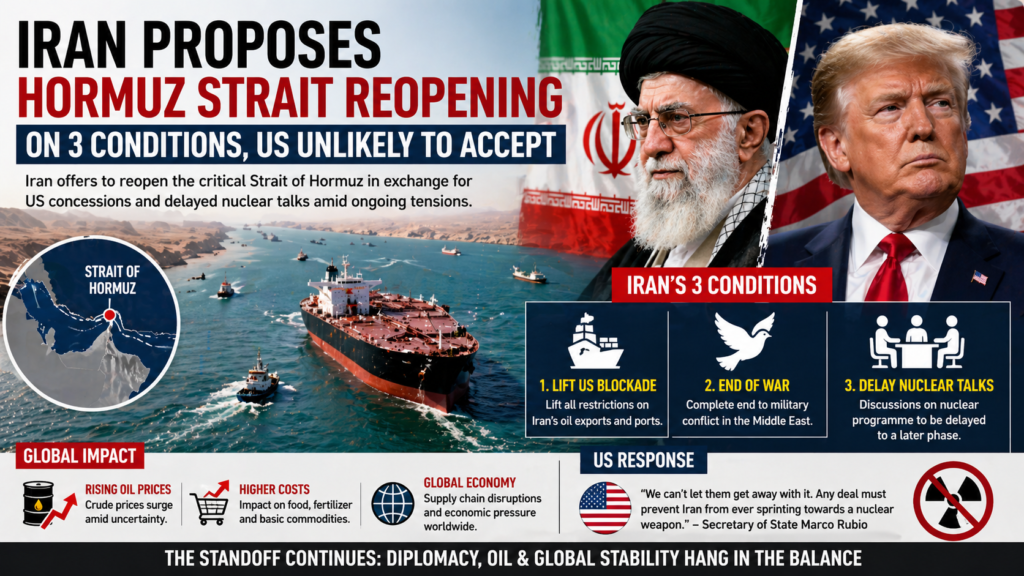
The geopolitical tension in the Middle East has taken a new turn as Iran has proposed reopening the strategically critical Strait of Hormuz under specific conditions. The move is being closely watched worldwide, especially by energy markets and global powers like the United States.
However, early signals suggest that the US, under former President Donald Trump’s leadership stance, may not fully agree with Iran’s proposal.
Iran Hormuz Strait Reopening: What Is the Proposal?
The Iran Hormuz Strait reopening proposal aims to ease tensions and resume normal maritime activity in one of the world’s most important oil transit routes.
According to reports, Iran has offered to reopen the strait if certain diplomatic and economic conditions are met. The proposal was presented during ongoing backchannel discussions involving regional mediators.
Iran’s 3 Key Conditions for Hormuz Reopening
Iran has clearly outlined three main demands:
- Lift US Blockade – The United States must remove restrictions on Iran’s oil exports and ports
- End of Military Conflict – A complete halt to ongoing hostilities in the Middle East
- Delay Nuclear Talks – Discussions on Iran’s nuclear program should be postponed to a later phase
These conditions reflect Iran’s attempt to gain economic relief while delaying pressure on its nuclear ambitions.
US Response to Iran Hormuz Strait Reopening Proposal
The US response to Iran Hormuz Strait reopening has been cautious and skeptical.
Key concerns from the US side include:
- Strong insistence on addressing Iran’s nuclear program immediately
- Fear that delaying talks may allow Iran to advance its nuclear capabilities
- Lack of trust regarding Iran’s long-term commitments
US officials have emphasized that any agreement must ensure that Iran cannot develop nuclear weapons under any circumstances.
Why the Strait of Hormuz Matters Globally
The Strait of Hormuz is one of the most crucial waterways in the world.
Key Facts:
- Handles nearly 20% of global oil trade
- Vital route for Gulf countries exporting oil and gas
- Any disruption impacts fuel prices worldwide
Closure or restrictions in this region directly affect global economies, including rising fuel and commodity prices.
Global Impact of the Hormuz Crisis
The ongoing standoff has already started affecting international markets.
Major Impacts:
- Rising oil and fuel prices globally
- Increased cost of food, fertilizers, and transport
- Pressure on global supply chains
- Economic uncertainty in energy-dependent countries
Countries heavily reliant on oil imports, including India, are closely monitoring the situation.
Trump’s Stance on Iran and Nuclear Deal
Donald Trump has consistently maintained a strict position on Iran:
- Opposes any deal that does not include nuclear restrictions
- Believes Iran should not be allowed to develop nuclear weapons
- Has shown frustration over Iran’s internal political divisions
His administration has indicated that delaying nuclear talks is unacceptable.
Future of Iran-US Negotiations
The future of negotiations remains uncertain.
While Iran’s proposal could ease immediate tensions, the disagreement over nuclear discussions remains a major obstacle. Diplomatic talks are expected to continue, but a breakthrough will depend on mutual compromises.
Key Takeaways
- Iran is ready for Hormuz Strait reopening under 3 conditions
- The US is not fully convinced, mainly due to nuclear concerns
- The situation is impacting global oil markets and economies
- Any final deal will have major consequences worldwide
Also Read: Hormuz Strait Impact on India: Rajnath Singh Flags Major Energy & Security Concerns
Final Verdict
The Iran Hormuz Strait reopening deal could be a turning point in easing Middle East tensions, but only if both sides find common ground. While Iran seeks economic relief, the US remains focused on long-term security concerns, especially regarding nuclear weapons.
Until a final agreement is reached, the global economy will continue to feel the pressure of this geopolitical standoff.