
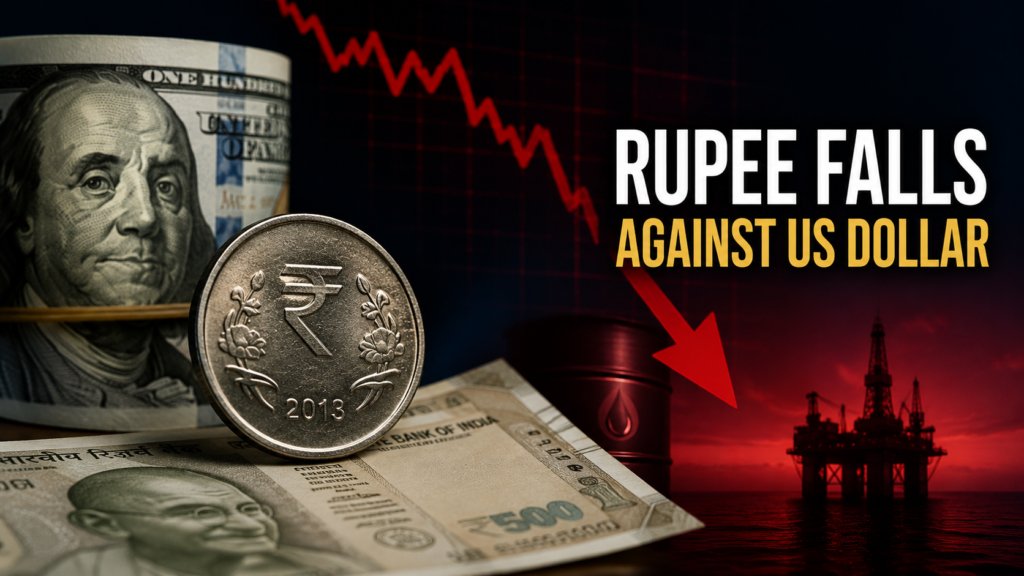
Rupee Falls Against US Dollar and the latest decline is drawing fresh attention from investors, businesses, and policymakers alike. The Indian currency weakened during early trading sessions as multiple global and domestic factors combined to create pressure on the foreign exchange market.
A sharp rise in crude oil prices, renewed geopolitical uncertainty in the Middle East, and increased demand for the US dollar have emerged as key reasons behind the latest movement. While currency fluctuations are a regular part of financial markets, this decline comes at a time when investors are closely monitoring global economic developments.
The weakening rupee is raising important questions about inflation, import costs, and the overall direction of India’s financial markets.
As traders evaluate the latest developments, the currency market is once again becoming one of the most closely watched sectors of the economy.
Advertisement

Also Read :- Microsoft Quantum Chip Breakthrough Signals a New Era of Computing
Rupee Falls Against US Dollar After Fresh Global Market Pressure
The Rupee Falls Against US Dollar trend continued in early trading as the Indian currency slipped significantly against the American dollar.
Market participants pointed to a combination of international and domestic factors that contributed to the decline. One of the biggest drivers was the strengthening of the US dollar in global markets.
Investors often move toward the dollar during periods of uncertainty because it is widely considered a safe-haven asset. As demand for the greenback increases, emerging market currencies frequently face downward pressure.
The latest market movement reflects this broader global trend.
Currency traders are closely monitoring economic indicators, geopolitical developments, and central bank policies that could influence future exchange rate movements.
Advertisement

Rising Crude Oil Prices Add Pressure on the Indian Currency
One of the most important factors behind the rupee’s decline is the sharp increase in crude oil prices.
India remains one of the world’s largest importers of crude oil. When international oil prices rise, the country must spend more foreign currency to meet its energy requirements.
This increased demand for dollars often puts pressure on the rupee.
Recent developments in the Middle East have fueled concerns about potential disruptions in global energy supplies. As geopolitical tensions intensified, crude oil prices moved higher, creating additional challenges for energy-importing economies.
The impact extends beyond currency markets.
Higher oil prices can influence transportation costs, manufacturing expenses, and consumer prices across various sectors of the economy.
These concerns are contributing to cautious sentiment among investors.
Geopolitical Tensions Fuel Market Volatility
Global financial markets have become increasingly sensitive to geopolitical developments.
Recent military actions and growing uncertainty in key energy-producing regions have triggered volatility across commodity, currency, and equity markets.
The Rupee Falls Against US Dollar story is closely linked to these international developments.
Whenever geopolitical risks rise, investors often reduce exposure to riskier assets and move capital toward traditionally safer investments.
The US dollar typically benefits from such shifts in investor sentiment.
As a result, emerging market currencies including the Indian rupee may experience temporary weakness.
Analysts believe market participants will continue watching geopolitical events closely in the coming days.
Any escalation could influence oil prices and currency markets further.
Foreign Investor Activity Remains a Key Market Indicator
Foreign investment flows play a major role in determining currency movements.
When international investors purchase Indian assets, demand for the rupee generally increases. Conversely, when investors move funds away from emerging markets, pressure on local currencies can intensify.
Recent global uncertainty has encouraged some investors to adopt a more cautious approach.
Market experts suggest that foreign portfolio flows will remain a critical factor influencing the rupee’s direction in the near term.
The behavior of institutional investors often provides important signals about broader market confidence.
As economic conditions evolve, investor positioning could significantly impact currency performance.
What a Weaker Rupee Means for India’s Economy
The implications of a weaker rupee extend far beyond the foreign exchange market.
A depreciating currency can make imports more expensive, increasing costs for businesses that rely on imported raw materials, machinery, or energy products.
Higher import expenses may eventually contribute to inflationary pressures.
Consumers could feel the impact through rising prices for fuel, transportation, and certain goods.
However, a weaker rupee is not entirely negative.
Export-oriented industries may benefit because Indian products become relatively more competitive in international markets.
Sectors such as information technology, pharmaceuticals, and manufacturing could experience advantages from favorable exchange rate movements.
The overall economic impact depends on the duration and magnitude of the currency decline.
Reserve Bank of India Closely Monitors Currency Markets
The Reserve Bank of India (RBI) remains a key player in maintaining stability within the foreign exchange market.
While the central bank generally allows market forces to determine currency values, it may intervene during periods of excessive volatility.
Investors often watch RBI actions closely for signals regarding monetary policy and currency management strategies.
The central bank’s primary objective is to ensure orderly market conditions while supporting broader economic stability.
Analysts believe the RBI has sufficient tools and foreign exchange reserves to manage sharp market disruptions if necessary.
This provides an important layer of confidence for investors navigating uncertain conditions.
Global Economic Trends Could Shape Future Currency Movement
The future direction of the rupee will depend on several interconnected factors.
Oil prices, US Federal Reserve policy decisions, geopolitical developments, inflation trends, and capital flows are all expected to influence market sentiment.
The Rupee Falls Against US Dollar trend could continue if global uncertainty remains elevated.
However, any improvement in geopolitical conditions or stabilization in energy prices may provide support for the Indian currency.
Market participants are expected to remain cautious as they assess evolving economic and financial conditions.
Every major development in global markets now has the potential to influence exchange rates almost instantly.
Rupee Falls Against US Dollar as Investors Watch Global Risks
Rupee Falls Against US Dollar remains one of the most important developments in India’s financial markets this week.
The decline highlights the growing influence of global events on domestic economic conditions. Rising crude oil prices, geopolitical uncertainty, and stronger demand for the US dollar have combined to create a challenging environment for emerging market currencies.
While short-term volatility is expected to continue, investors and policymakers are closely monitoring developments that could determine the next direction of the currency.
As global risks evolve and economic data emerges, the rupee’s performance will remain a critical indicator of market sentiment and economic resilience.