
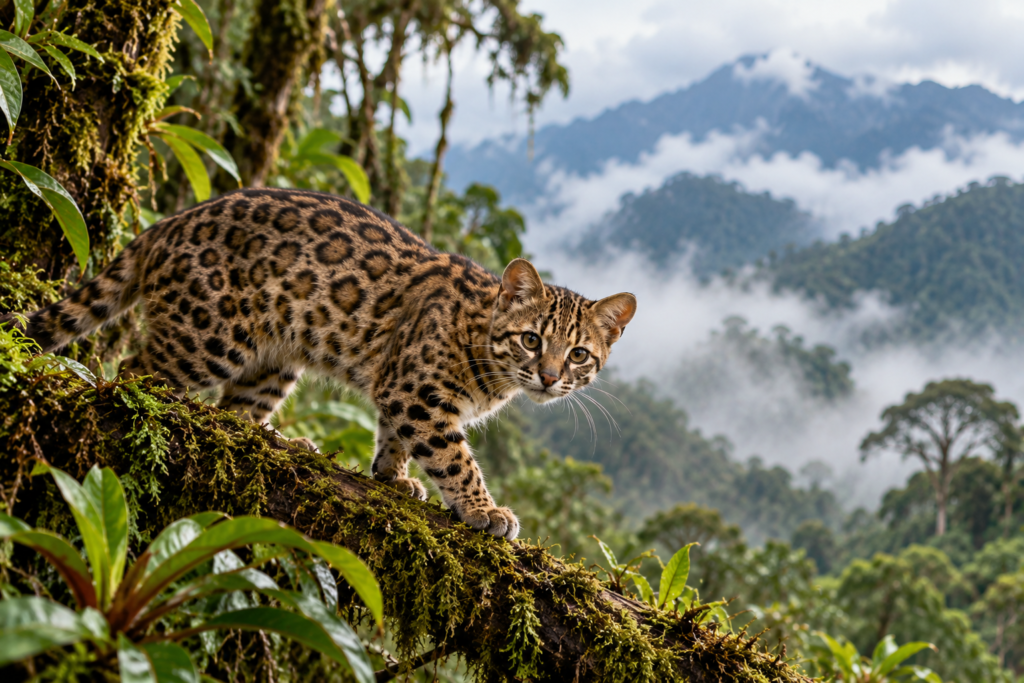
A previously unrecognised small wild cat has been formally described by scientists after research in Bolivia’s Yungas forests. Named Leopardus tilcayo, the animal belongs to a group of tiger cats that are known for their similar appearance and difficult identification.
The new tiger cat species identified in Bolivia was confirmed through genetic research, giving scientists a clearer understanding of the diversity of small wild cats found across South America.
A Small Cat With a Separate Identity
At first glance, Leopardus tilcayo may look similar to other tiger cats. Its light brown coat is covered with irregular rosette-like markings, making it difficult to identify the animal simply by appearance.
Researchers found that its genetic characteristics were different enough to establish it as a separate species. The discovery demonstrates why DNA analysis can be particularly useful when closely related wildlife species have similar physical features.

Researchers Studied Cats From Across South America
The identification was not based on a single animal. Scientists examined genetic material from 38 tiger cats collected from different parts of South America.
The results showed that the Bolivian cats belonged to a genetically distinct lineage. Researchers estimate that this lineage separated from other tiger cats around 1.4 million years ago.
Eight museum specimens were also included in the research. Comparing these samples helped researchers trace differences between populations and identify a distinct genetic lineage associated with the Bolivian cat.
Where Is Leopardus Tilcayo Found?
The newly recognised species is associated with Bolivia’s Yungas region. This mountainous area contains humid forests and changing elevations, creating habitats for a wide range of wildlife.
The environment also faces several pressures, including forest loss, agricultural expansion, fires and mining activity. These conditions make information about lesser-known species increasingly valuable for future wildlife research.
Scientists still have limited information about its lifestyle and behaviour.
What Does the New Tiger Cat Look Like?
Leopardus tilcayo is a relatively small feline. Researchers describe it as measuring about 46 centimetres in length and weighing around 1.4 kilograms.
Its coat has a light brown appearance with irregular markings across the body. While these features can help researchers recognise it, its genetic profile played a central role in confirming that it represents a distinct species.
Scientists Are Still Learning About Its Behaviour
There is still much to discover about Leopardus tilcayo.
Evidence from scat samples indicates that small rodents may form part of its diet. Some camera-trap observations also suggest activity during nighttime hours.
However, researchers do not yet have a complete picture of the animal’s population, behaviour, range or daily habits. More fieldwork will be needed to answer these questions.
The Yungas region itself faces environmental pressures, including deforestation, agricultural activity, fires and mining. These challenges make further research into the newly recognised cat particularly relevant.
Why Genetic Research Was Important
Wildlife classification is not always straightforward. Animals from closely related groups can share many physical characteristics while having significant genetic differences.
In this case, DNA analysis helped reveal a separate lineage that might otherwise have remained grouped with other tiger cats. The study also found five genetically distinct species within the tiger cat group, adding to scientists’ understanding of feline diversity in South America.
Conservation Research Could Follow
Formal recognition gives researchers a clearer basis for studying Leopardus tilcayo as its own species.
The species has been submitted for consideration in conservation assessments. Future research into its population and distribution could help determine how widespread it is and whether particular conservation measures are required.
For now, the discovery is an important reminder that even relatively well-studied regions can contain wildlife whose distinct identities have not yet been fully documented.
A New Chapter In South American Wildlife Research
The new tiger cat species identified in Bolivia has expanded scientists’ understanding of tiger cat diversity and highlighted the value of combining field observations with genetic evidence.
Leopardus tilcayo may be a small and elusive animal, but its identification raises larger questions about biodiversity in Bolivia’s forests. As researchers continue studying the species, they may learn more about where it lives, how it behaves and what is needed to protect its habitat.
Also visit us: UPI Charges Debate: Government Responds to Rahul Gandhi’s Criticism