
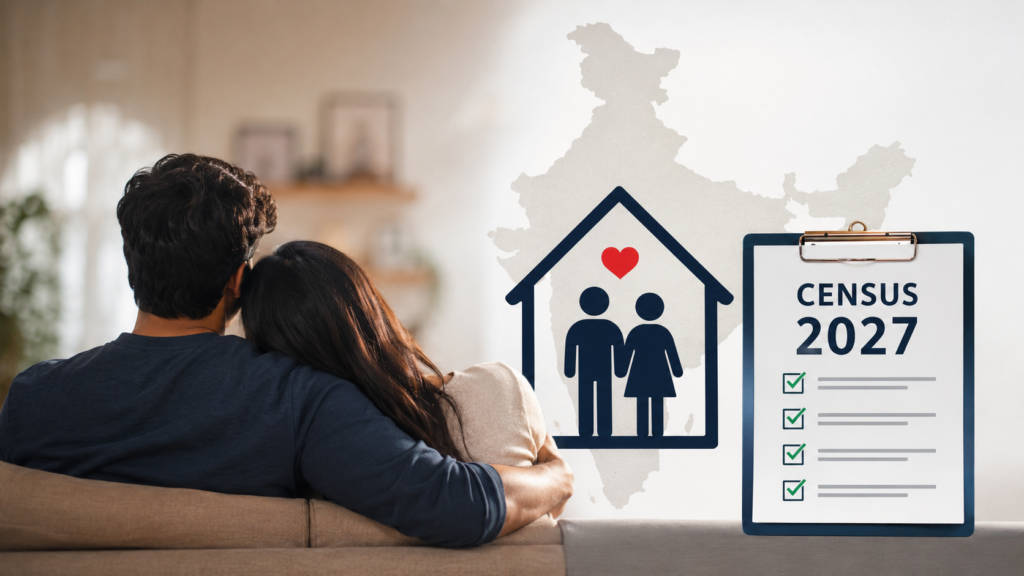
India’s upcoming Census 2027 is expected to introduce broader demographic categories to better understand changing social and family structures across the country. Among the major discussions is the possible inclusion of people living in live-in relationships during census data collection.
According to reports and policy discussions, authorities are considering collecting information about couples who are living together without formal marriage. The move is aimed at improving demographic accuracy and understanding modern urban lifestyle patterns in India.
Why Census 2027 Is Important
The Indian census is one of the world’s largest population surveys and plays a major role in government planning, welfare schemes, housing policies, and social research.
Census 2027 is expected to gather more detailed information related to:
- Family structures
- Migration trends
- Urban living patterns
- Employment status
- Housing conditions
- Relationship categories
Officials and experts believe that modern Indian society has evolved significantly in recent years, especially in metropolitan cities where live-in relationships are becoming more common among young adults.
Advertisement

Live-in Relationship Data May Be Recorded Separately
The proposed change does not mean live-in relationships are being converted into legal marriages. Instead, census authorities may create separate classifications for individuals living together without marriage.
This data can help policymakers understand:
- Changes in family systems
- Urban social behavior
- Housing demand
- Population distribution
- Social welfare requirements
Demographic experts say that including such categories helps governments prepare more accurate long-term policies.
Legal Status of Live-in Relationships in India
Live-in relationships are legal in India when both individuals are consenting adults.
The Supreme Court and several High Courts have repeatedly stated that adults have the right to live together without marriage. Over the years, courts have also provided certain legal protections to women in long-term live-in relationships.
Some legal protections are available under:
- Protection of Women from Domestic Violence Act, 2005
- Maintenance-related judgments
- Child legitimacy rights
However, live-in relationships and marriage are still legally different under Indian law.
Growing Urban Trend in India
Social researchers have observed a gradual rise in live-in relationships, especially in urban regions such as:
- Delhi
- Mumbai
- Bengaluru
- Pune
- Hyderabad
Experts believe changing lifestyles, career priorities, delayed marriages, and migration for work have contributed to this trend.
By collecting proper census data, authorities can better understand evolving social patterns across India.
Advertisement

No Official Marriage Status for Live-in Couples
Legal experts have clarified that including live-in relationship data in Census 2027 does not automatically provide marital status to couples.
Marriage in India is still governed by personal laws and legal registration procedures. Census classification is mainly used for statistical and demographic purposes.
What Experts Say
Policy analysts believe that broader demographic documentation can help in:
- Better social welfare planning
- Improved housing policies
- Women’s protection programs
- Urban development strategies
- Family-based economic studies
Many countries already collect similar demographic relationship data during national surveys.
Also Read: Vijay First Delhi Visit: PM Modi Meeting Speculation Creates Political Interest
Conclusion
Census 2027 may become one of India’s most detailed demographic exercises, reflecting changing social realities and modern family structures. The possible inclusion of live-in relationship categories is being viewed as a step toward better statistical understanding rather than a legal change in marital status.
As Indian society continues to evolve, demographic data collection is also adapting to capture new social patterns more accurately.