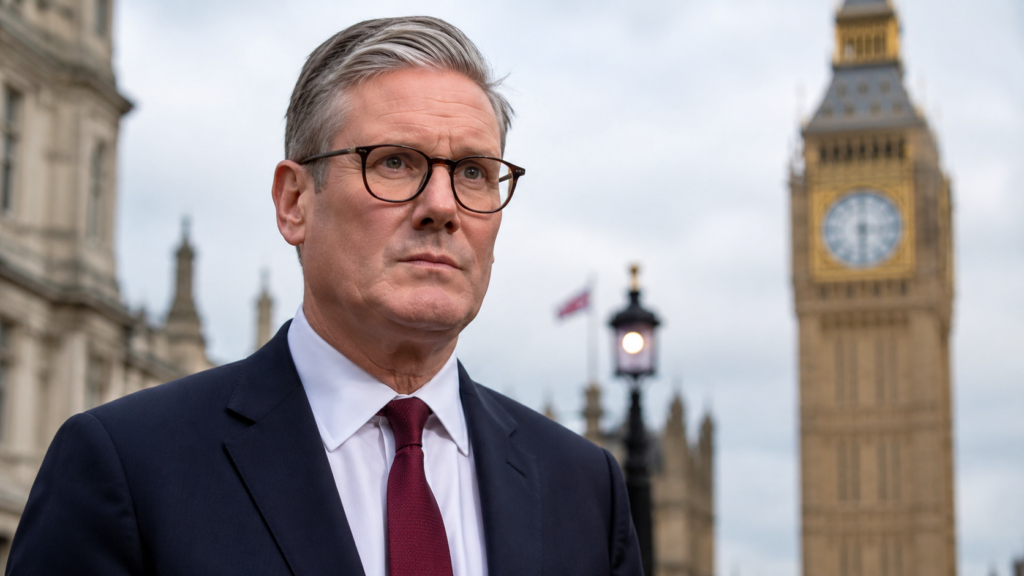
Keir Starmer Resignation has triggered a major political development in the United Kingdom, with the British Prime Minister confirming an exit timetable that could reshape the country’s political landscape. The announcement has intensified discussions within the Labour Party and prompted reactions from financial markets, political analysts, and opposition leaders.
The decision comes at a crucial moment for the UK government, with attention now shifting to the leadership transition process and the potential candidates who may emerge as successors.
Advertisement

Also Read :- Sushruta Statue Unveiled in Edinburgh: India’s Ancient Medical Legacy Receives Global Recognition
Keir Starmer Resignation Creates Political Uncertainty
- UK Prime Minister Keir Starmer confirmed plans to step down from leadership.
- The announcement included an outline of the expected transition timetable.
- Labour Party members are preparing for a leadership contest.
- Political observers believe the move could significantly influence future government policies.
- Opposition parties have begun responding to the changing political environment.
The Keir Starmer Resignation announcement immediately became one of the most closely watched political developments in Britain.
Advertisement

Why Is Keir Starmer Leaving?
According to reports, Starmer outlined a structured timeline for his departure while emphasizing the need for an orderly transition.
Key Points
- A formal leadership succession process is expected.
- Labour Party officials will oversee the transition.
- Government functions are expected to continue without disruption.
- Cabinet members are likely to remain in place during the transition period.
The focus remains on ensuring stability while a new leader is selected.
Financial Markets React to Keir Starmer Resignation
- The British pound (Sterling) weakened following reports of the announcement.
- UK government bond yields recorded movements as investors assessed political risks.
- Financial markets reacted to uncertainty surrounding future economic leadership.
- Analysts are closely monitoring investor sentiment and policy expectations.
The Keir Starmer Resignation has become an important factor for traders and economists evaluating the UK’s political and economic outlook.
Who Could Replace Keir Starmer?
Several political figures are being discussed as potential contenders for future leadership roles within Labour.
Potential Developments
- Leadership nominations are expected after official procedures begin.
- Senior Labour politicians may enter the race.
- Party members will play a role in selecting the next leader.
- The outcome could influence the government’s long-term agenda.
While no final decision has been made, speculation around possible successors continues to grow.
What happens after Keir Starmer’s resignation announcement?
The Labour Party is expected to begin a formal leadership transition process while government operations continue under established constitutional procedures.
Has a replacement been chosen?
No official successor has been confirmed. The selection process is expected to take place through Labour Party leadership mechanisms.
Key Facts About the Keir Starmer Resignation
- Keir Starmer announced an exit timetable.
- Labour Party leadership transition preparations are underway.
- Financial markets reacted to the political development.
- Sterling and government bond markets showed immediate movement.
- Political attention is now focused on the next Labour leader.
- The UK government is expected to maintain continuity during the transition period.
What This Means for the United Kingdom
- Leadership change could affect future policy priorities.
- Political debates within Labour are expected to intensify.
- Investors will closely monitor economic policy signals.
- Parliament may witness increased political activity in the coming weeks.
The Keir Starmer Resignation marks a significant moment in British politics. With the leadership transition process beginning, attention now turns to who will guide the Labour Party and shape the future direction of the United Kingdom.