
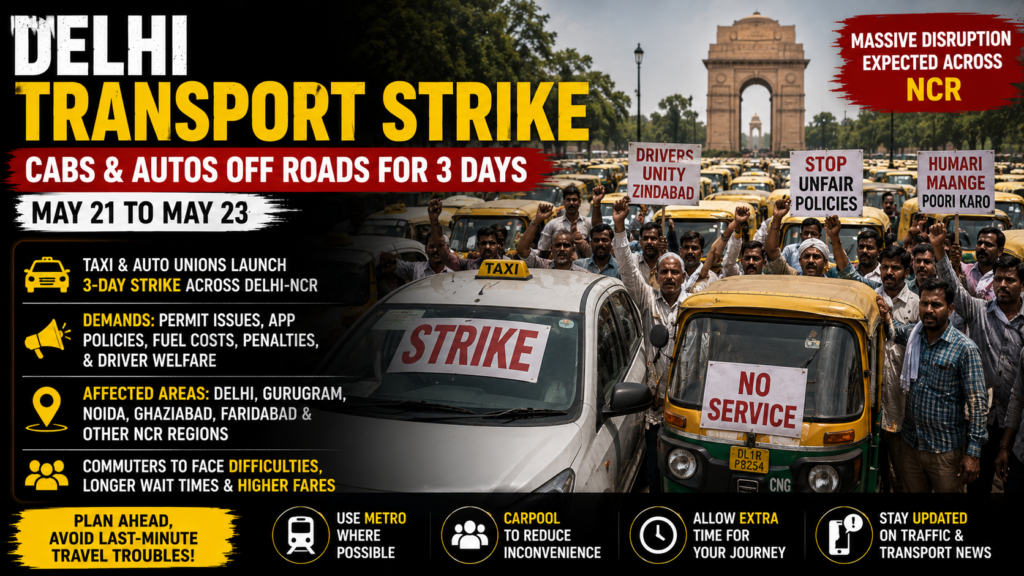
Delhi Transport Strike has triggered major disruption across Delhi-NCR as thousands of taxi and auto drivers launched a three-day protest that could affect lakhs of daily commuters.
Roads are witnessing unusual tension.
Passengers are struggling to find rides.
And transport hubs are becoming increasingly crowded.
The sudden strike has already started impacting office workers, students, airport passengers, and daily travelers.
For many residents, commuting is becoming stressful faster than expected.
And the biggest concern is that the disruption may continue for the next several days.
Why Delhi Transport Strike Has Started Across NCR
Multiple taxi and auto unions announced the Delhi transport strike to protest against several long-pending demands related to the transport sector.
Union leaders claimed drivers have been facing increasing financial pressure, operational difficulties, and policy-related concerns.
The protest reportedly includes demands connected to permit regulations, app-based cab policies, fuel costs, penalties, and transport department issues.
Driver groups say their concerns were repeatedly ignored despite multiple discussions.
That frustration eventually led to the large-scale strike announcement.
And now the impact is spreading rapidly across the NCR region.
Also Read – West Bengal Repolling Witnesses Massive Security Deployment And Political Heat
Delhi Transport Strike Affects Cabs, Autos And Daily Commuters
The strike is expected to heavily affect:
- Auto-rickshaw services
- App-based taxi services
- Local cab operators
- Transport connectivity in several NCR areas
Passengers at railway stations, metro stations, bus terminals, and airports are already facing difficulties finding transportation.
Many commuters reported longer waiting times and increased ride fares in areas where limited services remain operational.
Some people have started depending more on metro services and private vehicles to avoid uncertainty.
But with traffic already heavy in Delhi, travel conditions may become even more challenging.
Sponsored

Which Areas Could Face Maximum Impact During Delhi Transport Strike?
The strike is affecting multiple parts of Delhi-NCR, including:
- Central Delhi
- South Delhi
- East Delhi
- Noida
- Gurugram
- Ghaziabad
- Faridabad
Transport experts believe peak-hour congestion may worsen significantly if large numbers of drivers continue participating in the protest.
Business districts and commercial zones are expected to witness the biggest commuter pressure.
Airport travelers may also face last-minute transportation challenges.
That is why authorities are advising residents to plan journeys carefully.
Delhi Transport Strike Raises Pressure On Authorities
As the strike gains momentum, pressure is increasing on transport authorities and the Delhi government to respond quickly.
Officials are closely monitoring the situation.
Meetings between union representatives and authorities may continue during the protest period.
However, no major breakthrough had been officially confirmed during the initial phase of the strike.
Commuters are now hoping for a quick resolution before disruption intensifies further.
Because prolonged transport strikes can significantly impact city movement and productivity.
App-Based Cab Services Also Face Disruptions
One of the biggest concerns during the Delhi transport strike is the impact on app-based mobility platforms.
Several drivers associated with online cab aggregators are reportedly supporting the protest.
This could lead to:
- Higher ride prices
- Longer waiting times
- Limited cab availability
- Increased cancellations
Passengers trying to book rides during peak hours may experience severe delays.
Experts say demand-supply imbalance during strikes often causes temporary fare surges across transport platforms.
And that is already becoming visible in several NCR regions.
Why Delhi Transport Strike Matters For NCR Residents
Delhi-NCR depends heavily on public and semi-public transport systems for daily movement.
Lakhs of people use autos and taxis every day for office travel, school commutes, airport transfers, and local connectivity.
Even short-term disruptions can affect business activity, productivity, and public convenience on a large scale.
The strike also highlights the growing tensions within the transport sector regarding regulations, operational costs, and driver earnings.
Industry observers believe similar protests could become more common if long-term solutions are not addressed properly.
Commuters Search For Alternatives During Delhi Transport Strike
As transport options reduce, many residents are exploring alternatives.
Metro stations are witnessing increased crowds.
Carpooling demand is rising.
And some office workers are choosing remote work options temporarily.
Social media platforms are also filling with commuter complaints and travel updates.
People are sharing information about ride availability, fare hikes, and traffic congestion in real time.
This digital response is helping commuters navigate the situation more carefully.
Delhi Transport Strike Highlights Urban Mobility Challenges
The ongoing strike once again exposes how dependent large cities are on transport networks.
Urban mobility systems become highly vulnerable when disruptions affect key services simultaneously.
Experts believe cities like Delhi need stronger contingency planning to handle transport emergencies more efficiently.
Improved public transport integration and policy coordination could help reduce disruption during future protests.
Because in rapidly growing urban regions, uninterrupted mobility plays a critical role in daily life.
Sponsored