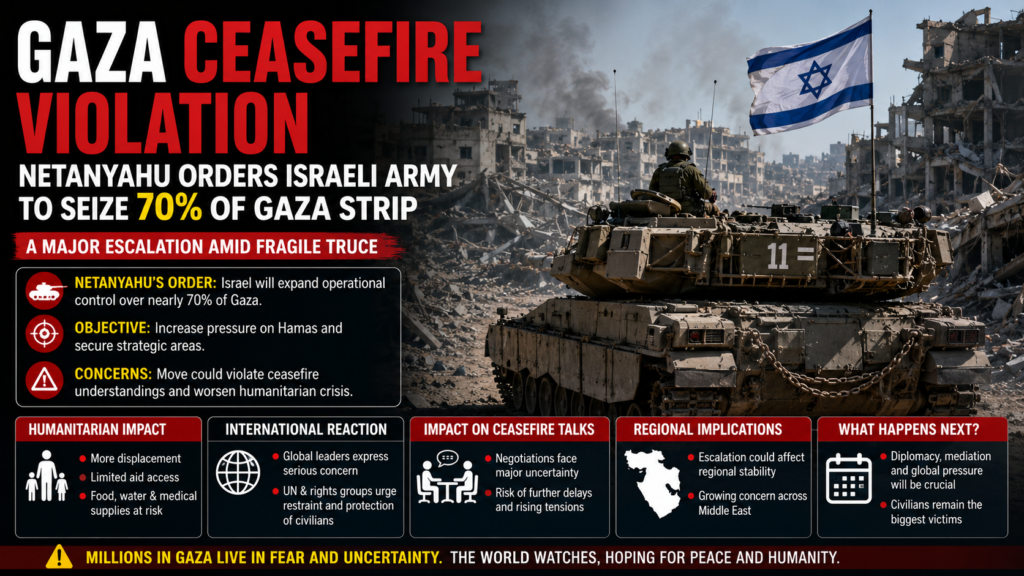
Gaza Ceasefire Violation has become a major international concern after Israeli Prime Minister Benjamin Netanyahu reportedly ordered the military to expand its control across significant portions of the Gaza Strip. The move has intensified tensions in the region and triggered fresh debates over the future of ceasefire efforts, humanitarian conditions and prospects for peace.
As global leaders closely monitor developments, the latest military directive has added a new layer of uncertainty to an already fragile situation. Reports indicate that Israeli forces are being instructed to establish control over a larger share of Gaza, a decision that has drawn criticism from multiple international organizations and foreign governments.
The development comes at a time when hopes for a lasting ceasefire remain uncertain, leaving millions of civilians caught in the middle of an ongoing conflict.
Advertisement

Also Read :- Meta Paid Subscriptions Launch: What Instagram, Facebook and WhatsApp Users Need to Know
Gaza Ceasefire Violation: What Has Happened?
The latest Gaza Ceasefire Violation concerns emerged following reports that Israel’s leadership directed military forces to expand operational control over approximately 70% of the Gaza Strip.
According to reports, the decision is part of Israel’s broader military strategy aimed at increasing pressure on Hamas and securing areas considered strategically important.
Supporters of the move argue that it is necessary for national security objectives. Critics, however, warn that expanding military control could undermine ongoing diplomatic efforts and further complicate ceasefire negotiations.
The decision has immediately attracted international attention because of its potential impact on both military operations and civilian populations.
Advertisement

Why the Expansion of Control Is Significant
The Gaza Ceasefire Violation debate centers on the scale of the reported expansion.
Control over a substantial portion of Gaza would significantly alter the operational landscape of the conflict. Military analysts note that such a move could affect humanitarian access, civilian movement and future negotiations between the parties involved.
Several experts believe that territorial control often becomes one of the most sensitive issues during ceasefire discussions.
The latest developments have therefore raised questions about whether current diplomatic efforts can continue effectively under changing conditions on the ground.
Observers fear that increased military activity could prolong instability rather than create conditions for de-escalation.
Gaza Ceasefire Violation Sparks International Reactions
The reported Gaza Ceasefire Violation has generated reactions from governments, international institutions and humanitarian organizations around the world.
Several countries have expressed concern regarding any action that could further escalate tensions in the region.
International organizations continue to call for:
- Protection of civilians
- Unrestricted humanitarian access
- Respect for international humanitarian law
- Continued diplomatic engagement
- Sustainable ceasefire negotiations
Many global leaders are urging all sides to prioritize measures that reduce violence and create opportunities for long-term stability.
Diplomatic discussions are expected to intensify as the international community evaluates the latest developments.
Humanitarian Concerns Continue to Grow
One of the most serious aspects of the Gaza Ceasefire Violation controversy involves the humanitarian situation inside Gaza.
Humanitarian agencies have repeatedly warned about the challenges faced by civilians due to ongoing military operations, displacement and limited access to essential services.
Key concerns include:
- Access to food supplies
- Medical care availability
- Safe shelter for displaced families
- Water and sanitation services
- Humanitarian aid delivery
Relief organizations argue that any expansion of military operations could further complicate efforts to provide assistance to vulnerable populations.
The humanitarian dimension remains a central issue in discussions surrounding the conflict.
Netanyahu Defends Security Objectives
Israeli officials maintain that security considerations remain the primary motivation behind military decisions.
In response to criticism surrounding the alleged Gaza Ceasefire Violation, supporters of the Israeli government’s position argue that military operations are necessary to address security threats and weaken militant infrastructure.
Israeli authorities have consistently stated that protecting national security and preventing future attacks remain top priorities.
Officials argue that military actions are being conducted within the framework of broader strategic objectives.
However, critics contend that military expansion may increase tensions and make diplomatic solutions more difficult to achieve.
Impact on Ceasefire Negotiations
The future of ceasefire talks has become one of the biggest questions emerging from the Gaza Ceasefire Violation debate.
Negotiators have spent months attempting to establish frameworks that could reduce hostilities and improve conditions for civilians.
Political analysts suggest that developments on the ground often influence diplomatic discussions.
Potential consequences may include:
- Delays in negotiations
- Increased mistrust between parties
- Additional international mediation efforts
- Greater diplomatic pressure from global powers
The coming weeks may prove crucial in determining whether dialogue can continue despite escalating tensions.
Many observers believe that diplomacy remains the only realistic path toward long-term stability.
Regional Implications of the Conflict
Beyond Gaza itself, the Gaza Ceasefire Violation controversy carries broader implications for the Middle East.
Regional governments are carefully monitoring developments because instability in Gaza can have wider geopolitical consequences.
Security experts note that prolonged conflict may affect regional diplomacy, economic activity and security cooperation.
The situation also has the potential to influence relationships between major international powers involved in Middle Eastern affairs.
As a result, decisions made in Gaza continue to attract attention far beyond the immediate conflict zone.
What Happens Next?
The next phase of the Gaza Ceasefire Violation story will likely depend on military developments, diplomatic responses and international pressure.
Several critical questions remain unanswered:
- Will ceasefire negotiations continue?
- How will humanitarian operations be affected?
- Can international mediators reduce tensions?
- Will military control expand further?
- How will global leaders respond?
The answers to these questions could shape the direction of the conflict in the weeks and months ahead.
Both political leaders and humanitarian organizations are closely watching developments as the situation continues to evolve.