
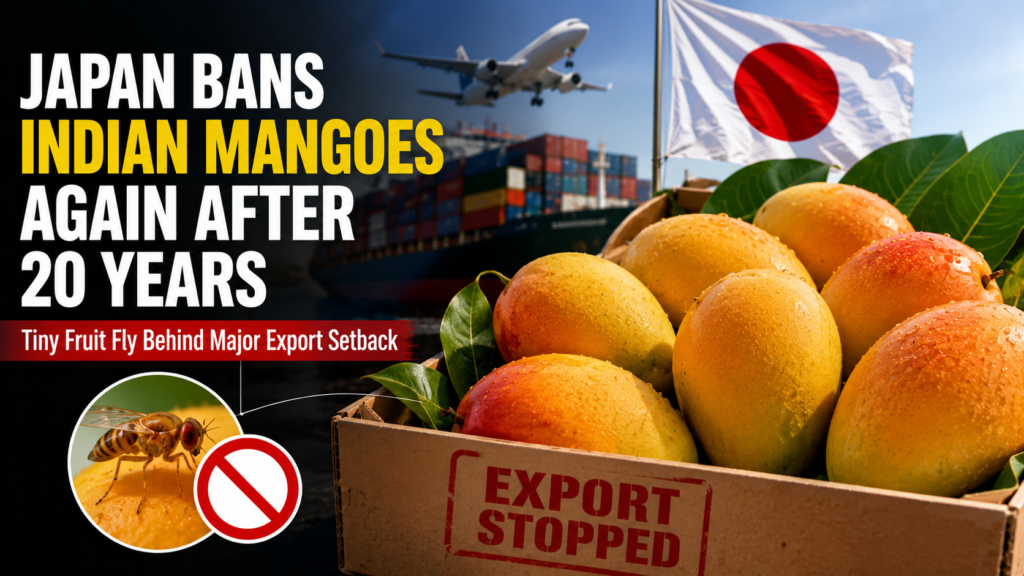
Japan Bans Indian Mangoes, and the decision has sent shockwaves through India’s fruit export industry. After nearly two decades of uninterrupted trade, Japan has halted imports of several popular Indian mango varieties, raising serious concerns among exporters, farmers and agricultural authorities.
The development is particularly significant because Japan is considered one of the world’s most quality-conscious markets. Indian mangoes have long enjoyed a premium reputation there, making the latest restriction both surprising and economically important.
What makes the story even more intriguing is that the entire issue reportedly revolves around a tiny pest that managed to disrupt a trade relationship built over many years.
As investigations continue, exporters are now racing to understand what went wrong and how quickly the ban can be reversed.
Advertisement

Also Read :- Tata Tiago Facelift 2026 Launched in India: More Premium, More Features and Bigger Value Than Before
Japan Bans Indian Mangoes Over Pest Detection Concerns
The primary reason Japan Bans Indian Mangoes is linked to the detection of a quarantine pest in export consignments.
According to reports, Japanese authorities identified concerns related to fruit fly contamination during inspection procedures. Fruit flies are considered one of the most serious agricultural pests because they can damage crops and spread rapidly if introduced into new environments.
Japan maintains some of the strictest plant quarantine standards in the world. Even a small number of pest detections can trigger immediate restrictions to protect domestic agriculture.
As a result, authorities decided to suspend imports of Indian mango shipments until concerns are fully addressed.
The decision highlights how sensitive international agricultural trade can be when biosecurity risks are involved.
Advertisement

Which Mango Varieties Are Affected?
The latest development in which Japan Bans Indian Mangoes impacts several popular varieties that have traditionally been exported to Japanese consumers.
Among the most recognized varieties are:
- Alphonso Mango
- Kesar Mango
- Langra Mango
- Chausa Mango
- Other approved export varieties
These mangoes are highly valued for their taste, aroma and premium quality.
Japanese consumers have long appreciated Indian mangoes for their unique flavor profile, making them a sought-after seasonal product.
The suspension therefore affects not only exporters but also buyers who eagerly await Indian mango imports each year.
Why Japan’s Market Matters So Much
When Japan Bans Indian Mangoes, the impact extends beyond the immediate loss of shipments.
Japan represents a premium-value market where consumers are willing to pay higher prices for imported agricultural products that meet strict quality standards.
For Indian exporters, access to Japan offers several advantages:
- Higher export margins
- Strong brand reputation
- Premium market positioning
- Long-term trade opportunities
- Global credibility for quality compliance
Losing access to such a market, even temporarily, can affect both revenue and international confidence.
Industry experts say restoring trust will now become a top priority.
How One Tiny Fruit Fly Created a Big Problem
The reason Japan Bans Indian Mangoes demonstrates how even a minor pest issue can have major consequences in international trade.
Fruit flies may appear insignificant, but agricultural authorities worldwide treat them as a serious threat.
The insects can:
- Damage fruit crops
- Reduce agricultural productivity
- Spread rapidly across regions
- Affect domestic food security
- Increase pest management costs
Because of these risks, importing countries enforce strict quarantine rules.
Even a single detection can trigger extensive investigations and immediate trade restrictions.
This incident serves as a reminder that agricultural exports depend not only on product quality but also on flawless compliance with phytosanitary regulations.
Japan Bans Indian Mangoes: Impact on Farmers and Exporters
The latest decision under which Japan Bans Indian Mangoes is expected to affect multiple stakeholders across India’s agricultural supply chain.
Exporters now face uncertainty regarding pending orders and future shipments.
Farmers may also experience challenges if premium export demand declines during the mango season.
Potential impacts include:
- Reduced export earnings
- Inventory management issues
- Market uncertainty
- Additional inspection requirements
- Higher compliance costs
For producers who specifically cultivate mangoes for export markets, the development is particularly concerning.
Many businesses are now hoping for a swift resolution through diplomatic and technical discussions.
What Indian Authorities Are Doing
Following the decision in which Japan Bans Indian Mangoes, Indian authorities have begun working with Japanese counterparts to understand the exact cause of the issue.
Agricultural officials are expected to review:
- Export inspection procedures
- Treatment protocols
- Packing facility operations
- Pest monitoring systems
- Compliance documentation
The objective is to identify any gaps and implement corrective measures as quickly as possible.
Export agencies are also likely to strengthen monitoring systems to prevent similar incidents in future shipments.
Industry leaders believe transparency and cooperation will be essential for restoring market access.
Could the Ban Be Temporary?
A major question after Japan Bans Indian Mangoes is whether the restriction will remain in place long term.
Trade experts suggest that agricultural bans linked to quarantine concerns are often temporary if corrective actions are implemented effectively.
Much will depend on:
- Investigation findings
- Additional inspections
- Compliance improvements
- Bilateral discussions
- Future shipment testing
If authorities can demonstrate that export systems meet Japanese standards, imports could potentially resume.
However, timelines remain uncertain until official reviews are completed.
What This Means for India’s Agricultural Exports
The episode in which Japan Bans Indian Mangoes carries lessons for India’s broader agricultural export sector.
Global markets are becoming increasingly demanding regarding food safety, pest management and traceability.
Export success now depends on more than production volume alone.
Countries must consistently demonstrate:
- High-quality standards
- Reliable inspection systems
- Strong quarantine compliance
- International certification practices
- Effective supply chain monitoring
The mango export issue highlights the importance of maintaining world-class agricultural standards at every stage of production and distribution.