
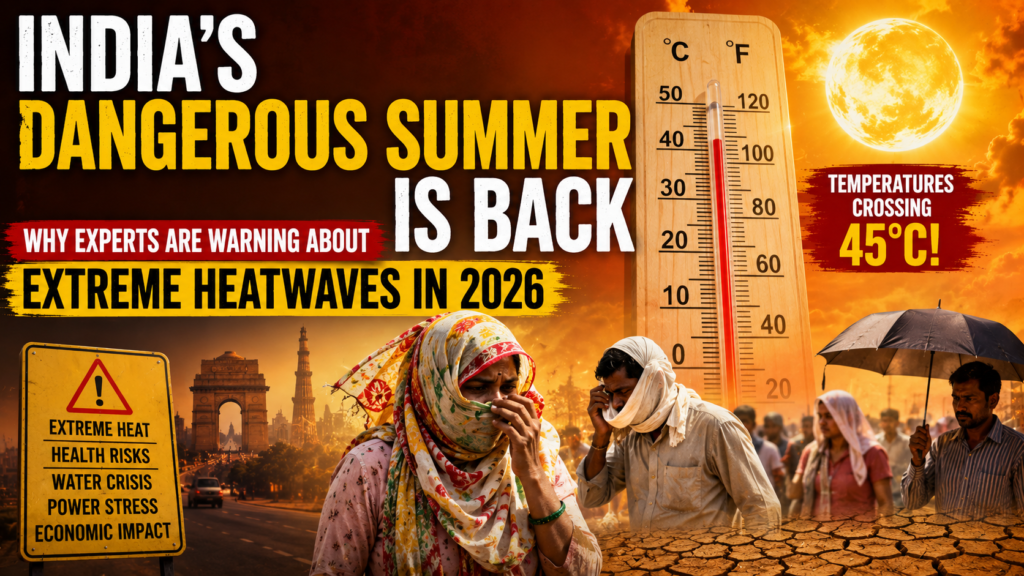
India is once again preparing for a brutal and dangerous summer. Weather experts, climate scientists, and disaster management authorities are warning that the India Extreme Heatwaves 2026 seaso`n could become one of the harshest in recent years.
Several states are already reporting unusually high temperatures, while forecasts suggest that heatwave conditions may arrive earlier and last longer than normal. Cities across North India, Central India, and parts of Western India are expected to face severe heat stress in the coming months.
The concern surrounding India Extreme Heatwaves 2026 is not just about discomfort. Experts believe the rising temperatures could create serious health risks, economic losses, water shortages, and power crises across the country.
Why Experts Are Alarmed This Year
Heatwaves are not new to India. However, scientists say climate patterns are becoming more extreme and unpredictable every year.
According to climate experts, the intensity and duration of the India Extreme Heatwaves 2026 season may increase because of:
- Global warming
- Reduced winter rainfall
- Urban heat buildup
- Weak pre-monsoon cooling
- Rising pollution levels
- El Niño weather conditions
Meteorologists believe temperatures in several regions could cross dangerous levels above 45°C during peak summer months.
The biggest concern is that night temperatures are also staying high. Normally, nights provide relief after hot days. But when temperatures remain elevated throughout the night, the human body struggles to recover from heat stress.
This increases health dangers significantly during the India Extreme Heatwaves 2026 period.

Health Risks Could Become Severe
Doctors are warning that prolonged heat exposure can trigger dehydration, heatstroke, breathing difficulties, and heart-related complications.
Children, elderly citizens, outdoor workers, and people with existing medical conditions are considered most vulnerable.
The India Extreme Heatwaves 2026 warning has become particularly serious because large populations in Indian cities still lack proper cooling systems and heat protection infrastructure.
Hospitals may witness rising cases of:
- Heat exhaustion
- Low blood pressure
- Kidney stress
- Sunstroke
- Severe dehydration
Experts also warn that humidity combined with extreme temperatures can make conditions even more dangerous.
In many cities, concrete roads, traffic congestion, and densely packed buildings trap heat for longer periods, creating urban “heat islands.”
This means urban residents may experience temperatures even higher than official weather reports during the India Extreme Heatwaves 2026 season.
India’s Economy Could Also Be Affected
Extreme heat is no longer just an environmental issue. It is becoming a major economic challenge.
The India Extreme Heatwaves 2026 season may affect multiple sectors, including agriculture, construction, transportation, and power generation.
Farmers are especially worried about crop damage caused by prolonged heat and water shortages. High temperatures can reduce wheat yields, damage vegetables, and increase irrigation pressure.
At the same time, electricity demand rises sharply during extreme summers as millions of households use air conditioners, coolers, and fans continuously.
This creates pressure on power grids and increases the risk of electricity shortages in several states.
Construction workers, delivery workers, street vendors, and factory employees may also face productivity losses due to unsafe working conditions.
Experts say India could lose billions in economic productivity if heatwaves continue becoming more intense every year.
Climate Change Is Becoming Harder to Ignore
Scientists say the India Extreme Heatwaves 2026 warning reflects a larger climate crisis that is becoming increasingly visible.
Over the last decade, India has experienced:
- More frequent heatwaves
- Irregular monsoon patterns
- Flash floods
- Water scarcity
- Rising urban temperatures
Climate researchers believe human-driven climate change is increasing the frequency of extreme weather events globally.
India’s rapidly growing cities are also contributing to the problem. Large-scale construction, loss of green spaces, and rising vehicle emissions trap heat and reduce natural cooling.
Many experts believe India urgently needs long-term heat management strategies rather than temporary emergency responses.
What Authorities Are Doing
State governments and local administrations are already preparing heat action plans in several regions.
The response to the India Extreme Heatwaves 2026 threat includes:
- Opening cooling centers
- Issuing public health advisories
- Adjusting school timings
- Increasing water supply monitoring
- Preparing hospitals for emergency cases
Authorities are also encouraging people to avoid outdoor activities during peak afternoon hours.
However, experts warn that awareness alone may not be enough if temperatures continue breaking records.
How Citizens Can Protect Themselves
Health experts recommend several important precautions during the India Extreme Heatwaves 2026 season:
- Drink water regularly
- Avoid direct sunlight during afternoon hours
- Wear light cotton clothing
- Reduce outdoor physical activity
- Use ORS and electrolyte drinks if needed
- Never leave children or pets inside parked vehicles
People working outdoors should take frequent breaks and avoid continuous heat exposure.
Experts also advise families to check regularly on elderly relatives living alone during extreme heat conditions.
Final Thoughts
The warning around India Extreme Heatwaves 2026 is a reminder that India’s summers are becoming more dangerous every year.
Extreme heat is no longer just a seasonal inconvenience. It is now a major public health, economic, and climate challenge that affects millions of people across the country.
If current climate patterns continue, India may face even harsher summers in the future. The challenge now is whether governments, cities, and citizens can prepare fast enough to reduce the risks before temperatures become even more deadly.
Also read:Oil Companies Losing ₹1000 Crore: Why Petrol Prices Are Still Stable