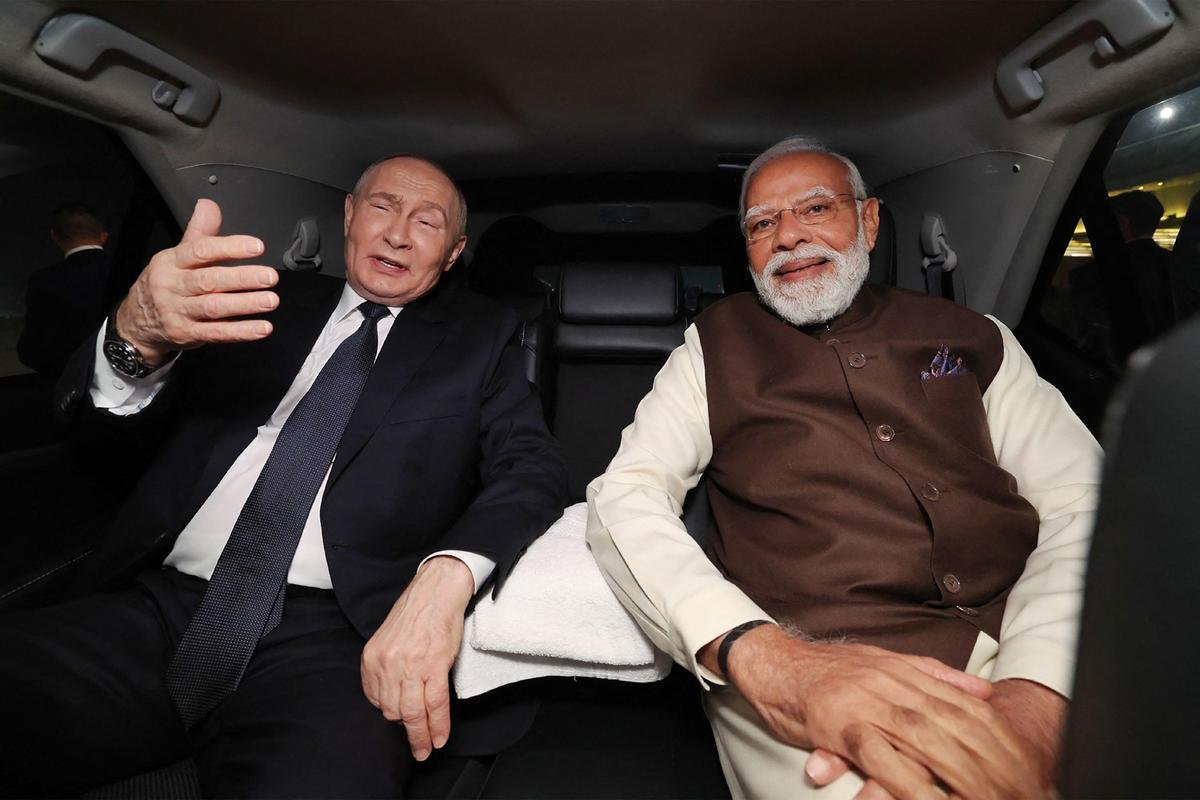
India and Russia are preparing to sign several important agreements during Russian President Vladimir Putin’s two-day visit to New Delhi. According to official sources, the pacts will focus on healthcare, trade, agriculture, media cooperation, and cultural exchange. The visit is seen as an effort by both nations to expand their relationship beyond traditional defence ties.
The agreements are part of a long term roadmap designed to guide India–Russia cooperation till 2030. This plan aims to boost economic ties, support new joint projects, and encourage more people-to-people engagement.
Main areas of cooperation expected:
Health:
India and Russia may collaborate on pharmaceuticals, medical equipment, and public-health projects. This could include joint research, vaccine cooperation, or technology exchange.
Trade:
New trade agreements are likely to increase business opportunities between the two countries, especially in non-defense sectors. Both sides want to diversify their trade relationship to reduce dependency on limited products.
Agriculture:
The agriculture pact may focus on food security, export of farm products, sharing of farming technology, and improving supply-chain cooperation.
Media:
Media collaboration could include content exchange, easier access for journalists, and possible joint productions or training programs.
Cultural Exchange:
This agreement aims to increase cultural events, academic exchanges, student programs, and tourism-related activities between the two countries.
Several senior Russian officials are travelling with President Putin on this visit. The delegation includes seven senior ministers including the Defense Minister, Finance Minister, and Health Minister along with the Governor of Russia’s Central Bank. In addition, a wide-ranging business delegation (top executives and industry heads) is part of the contingent, indicating that economic and trade cooperation will also be high on the agenda.
During his visit, President Putin will receive a ceremonial welcome, attend a high-level summit with Prime Minister Narendra Modi, meet business leaders, and be hosted at a state dinner, reflecting the importance India places on the partnership.
While the areas of cooperation are clear, the full details of the agreements will be released once the documents are signed.
Putin’s visit marks an important moment in India Russia relations. The upcoming agreements show a clear intention to strengthen ties across multiple sectors, not just defense. Having top Russian ministers and business leaders accompany the president underlines that both countries are serious about converting agreements into meaningful cooperation making this visit potentially transformative for health, agriculture, trade, and cultural ties between the two nations.
What challenges can be there?
- Delays in implementation – Agreements may take time to start.
- Sanctions on Russia – Can affect trade and payments.
- Trade imbalance – India imports more than it exports.
- Banking issues – Payment systems between both countries aren’t smooth.
- Logistics problems – Transport routes are still developing.
- Different regulations – Health and agriculture rules don’t match easily.
- Media sensitivities – Cultural and content differences may create hurdles.
- Geopolitical pressure – Other countries may react to India–Russia ties.
- Business uncertainty – Companies may be cautious about investments.
Will the West accept the strengthening of Russian-India ties?
- The West may not be very happy, but they will not stop India either.
- The West wants India to stay close to them.
- But they also know India has had good relations with Russia for many years.
- They may feel a little worried if India and Russia work too closely.
- Still, they won’t say much because they also need India as an important partner.
Why should we not compare ourselves with China and Russia’s friendship?
- China and Russia are friends mainly because it helps them in politics
- Their friendship is more like a deal, not real trust.
- Both want to be super powerful, so their friendship is not very natural.
- They come together mostly to oppose Western countries.
- Both want to be super powerful, so their friendship is not very natural.
How are we different from that?
- Our country likes to make its own decisions, not copy anyone.
- We stay friendly with many countries, not just one group.
- We focus on peace and development, not power fights.
- We don’t take extreme sides in world issues.
- Our foreign policy is balanced and open
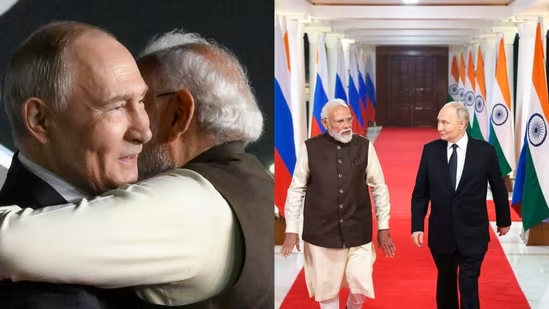
In summary, Putin’s visit shows that India and Russia want to work together in many new areas. There will be challenges, but both sides seem committed to turning these plans into real progress. As India follows its own balanced foreign policy, it will continue to build strong ties with Russia while keeping good relations with other major countries