
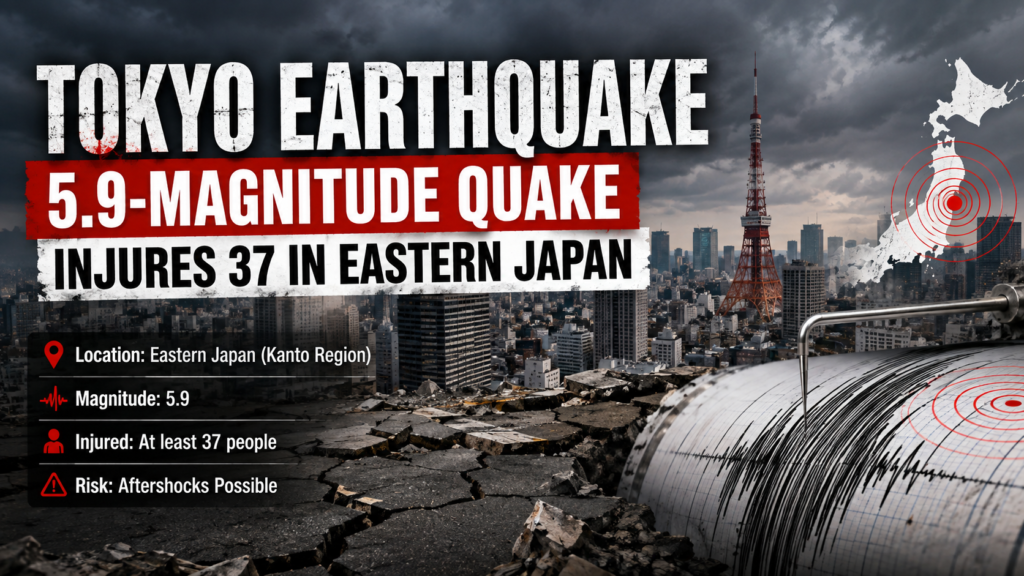
Tokyo Earthquake Hits Eastern Japan
Tokyo earthquake tremors shook eastern Japan on August 23, 2026, with a magnitude 5.9 earthquake causing injuries and strong shaking across parts of the Kanto region.
According to reports from Euronews, Al Jazeera and other sources, at least 37 people were injured following the earthquake. The tremor was felt strongly in and around Tokyo, bringing renewed attention to earthquake preparedness in one of the world’s most seismically active regions.
Also Read :- Manish Anandani Colgate Palmolive India CEO: 5 Key Details About His Return
Key Updates From the Tokyo Earthquake
- Magnitude: 5.9
- Location: Eastern Japan, affecting the Kanto region
- Impact: Strong shaking was reported across the area, including Tokyo
- Injuries: At least 37 people were reported injured
- Date: August 23, 2026
- Main concern: Authorities and residents remained alert for possible aftershocks

How Strong Was the 5.9-Magnitude Earthquake?
A 5.9-magnitude earthquake is capable of producing significant shaking, particularly when the epicentre is relatively close to populated areas.
The Tokyo earthquake was strong enough to cause injuries and create disruption across affected parts of eastern Japan. The event once again highlighted the vulnerability of densely populated urban areas to seismic activity.
Japan has extensive earthquake-resistant infrastructure and emergency-response systems because earthquakes occur frequently across the country. However, even moderate-to-strong earthquakes can cause injuries when people are indoors, objects fall or buildings and infrastructure experience sudden movement.
Where Was the Earthquake Felt?
The earthquake affected eastern Japan and the wider Kanto region, with shaking experienced in Tokyo and surrounding areas.
The Kanto region is home to a huge population and includes Japan’s capital and major economic centres. Because of this concentration of people and infrastructure, even a single earthquake can attract significant attention.
Reports following the Tokyo earthquake focused on injuries and the potential for further seismic activity as authorities assessed the situation.
Is There an Aftershock Risk?
The possibility of aftershocks remains an important concern following a major earthquake.
Aftershocks can occur after the main tremor as geological stress adjusts around the affected area. Their timing and strength cannot be predicted precisely, which is why residents are generally advised to remain cautious following an earthquake.
The 5.9-magnitude event has therefore renewed attention on emergency preparedness across Tokyo and the surrounding Kanto region.
Why the Tokyo Earthquake Matters
- 37 injuries make the incident a significant local emergency.
- The earthquake struck a densely populated region.
- Tokyo’s location makes seismic events particularly important because of its enormous population and infrastructure network.
- The event highlights Japan’s continuing need for earthquake preparedness and resilient infrastructure.
- Monitoring for aftershocks and additional damage remains important following the main earthquake.
What Happens Next?
Authorities and emergency services will continue assessing reports of injuries and damage following the earthquake. Residents in affected areas are expected to remain alert while information about possible aftershocks and the wider impact develops.
The Tokyo earthquake is another reminder that seismic activity remains an ongoing natural hazard in Japan, despite the country’s advanced earthquake-resistant construction and emergency preparedness systems.