
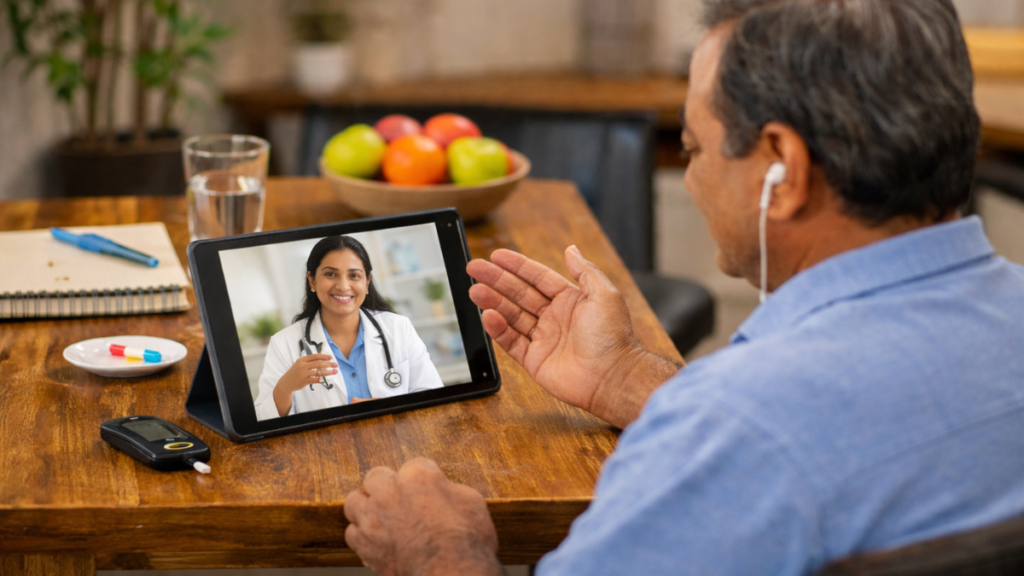
Telemedicine Reduces MASLD Risk — this is the key finding of a new 2026 study that could change how metabolic diseases are managed worldwide.
Metabolic Dysfunction-Associated Steatotic Liver Disease (MASLD) is a condition where excess fat builds up in the liver due to metabolic issues such as:
- Type 2 diabetes
- Obesity
- Insulin resistance
If left untreated, MASLD can progress to a more severe condition known as MASH (Metabolic Dysfunction-Associated Steatohepatitis), which can lead to:
- Liver damage
- Cirrhosis
- Increased risk of death
With rising diabetes and obesity cases globally, MASLD has become a major public health concern.
Telemedicine Reduces MASLD Risk: What the Study Found
A recent real-world study published in Hepatology (2026) highlights how telemedicine-based nutrition programs can significantly reduce liver disease risk.
Study Overview
- Participants: 5,031 adults
- Conditions included:
- Type 2 diabetes
- Prediabetes
- Overweight & obesity
- Compared with a matched group receiving usual care
- Data source: Komodo Healthcare Map (2015–2024)
Key Findings: Telemedicine Reduces MASLD Risk Significantly
The results strongly support the claim that telemedicine reduces MASLD risk:
Major Outcomes
- 36% lower risk of developing liver disease
- 62% lower risk of progression to severe liver disease (MASH)
- 67% reduction in advanced liver disease
- 75% fewer liver-related complications
Additionally:
- Liver disease incidence was 29.9 per 1,000 person-years in the telemedicine group
- Compared to 44.9 in standard care patients
How Telemedicine Nutrition Programs Work
The study focused on a structured program called:
Virta Individualised Nutrition Therapy (VINT)Key Features:
- Personalized diet plans
- Focus on carbohydrate reduction
- Continuous remote monitoring
- Lifestyle coaching via telemedicine
This approach addresses the root cause of metabolic dysfunction, rather than just treating symptoms.
Also Read: Thepla vs Paratha: Which Indian Breakfast Is Better for Weight Loss?
Weight Loss Plays a Crucial Role
Another important finding supporting that telemedicine reduces MASLD risk is the impact of weight loss.
Key Insight:
- Patients who lost 15% or more body weight had:
- 34% lower risk of liver disease progression
This shows that:
Sustainable weight loss = Better liver health
Why This Study is Important for Patients
This research is a breakthrough because it shows:
1. Scalable Healthcare Solution
Telemedicine allows treatment to reach:
- Rural populations
- Remote areas
- Patients with limited access to specialists
2. Convenient & Accessible Care
Patients can:
- Consult experts from home
- Follow diet plans easily
- Get continuous monitoring
3. Preventive Healthcare Approach
Instead of waiting for disease progression, telemedicine focuses on:
- Early intervention
- Lifestyle changes
- Long-term disease prevention
Limitations of the Study
While the findings are promising, there are some limitations:
- The study was observational
- It does not prove direct causation
- More clinical trials are needed
However, consistent results across multiple outcomes make the evidence strong.
Future of MASLD Treatment
Experts believe that telemedicine will play a major role in managing metabolic diseases in the future.
Upcoming research may include:
- Body composition analysis
- Waist circumference tracking
- Advanced metabolic markers
This will further strengthen how telemedicine reduces MASLD risk and improves patient outcomes.