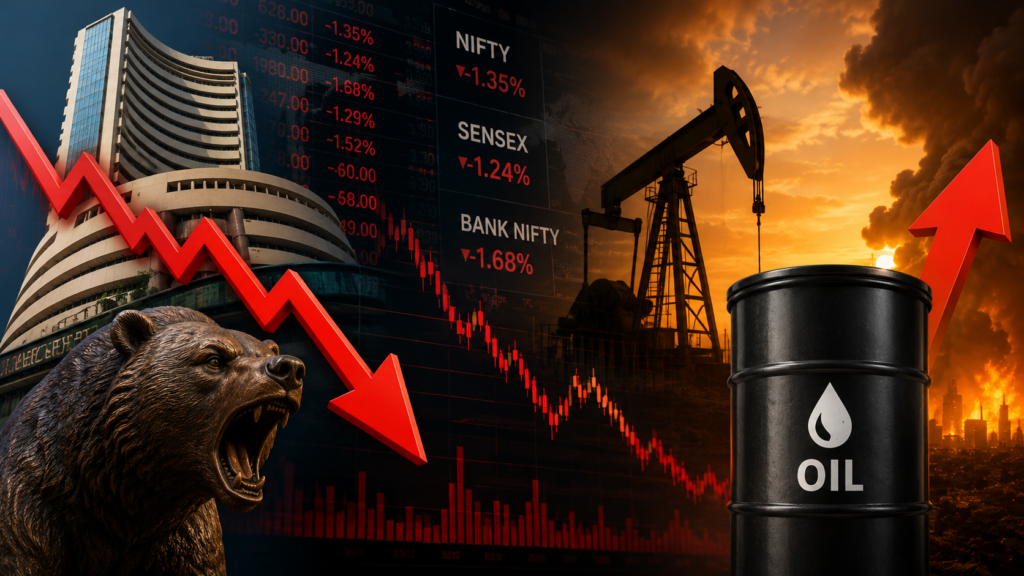
Indian stock markets opened under pressure as growing tensions in West Asia and rising crude oil prices made investors cautious. The Stock Market Slump reflected wider concerns over geopolitical uncertainty and its possible impact on India’s economy.
Selling pressure was visible in early trade as market participants closely watched global developments, oil prices and signals from overseas markets.
Why Did the Stock Market Fall?
The main concern for investors is the continuing tension in West Asia. Any escalation in the region can affect global energy supplies and push crude oil prices higher.
For India, expensive crude is a major concern because the country imports a large part of its oil requirements. Higher prices can increase the import bill and create fresh pressure on inflation.
This uncertainty has made investors more careful about taking risks in equities.

Higher Oil Prices Add to Market Worries
Rising crude oil prices are closely watched by Indian markets. When oil becomes more expensive, sectors dependent on fuel and transportation may face higher operating costs.
Airlines, logistics businesses, paint companies and other energy-sensitive industries can come under pressure if elevated oil prices continue for a longer period.
At the same time, investors also watch the rupee because higher oil import costs can affect demand for the US dollar.
West Asia Tensions Keep Global Investors Cautious
The latest Stock Market Slump is not only about domestic factors. Geopolitical developments in West Asia have increased uncertainty across global financial markets.
Investors often move towards safer assets during periods of conflict or political instability. Equity markets, particularly in emerging economies, can experience higher volatility when global risk sentiment weakens.
Any further escalation could keep markets nervous in the coming sessions.
Also Read: Kusumgar IPO Closes Today: Latest Subscription Status, GMP Trend and What Investors Should Know
What Should Investors Watch Now?
Market participants are likely to closely follow crude oil prices, developments in West Asia, foreign investor activity and global market trends.
Short-term volatility may remain high as traders react to new geopolitical updates. Investors are generally advised to avoid making decisions based only on sudden market movements and instead assess their financial goals and risk capacity.
The direction of Indian markets in the near term could largely depend on whether tensions in West Asia ease and whether crude oil prices stabilise.
As global uncertainty continues, the Stock Market Slump shows how quickly geopolitical developments and energy prices can influence investor sentiment in India.