
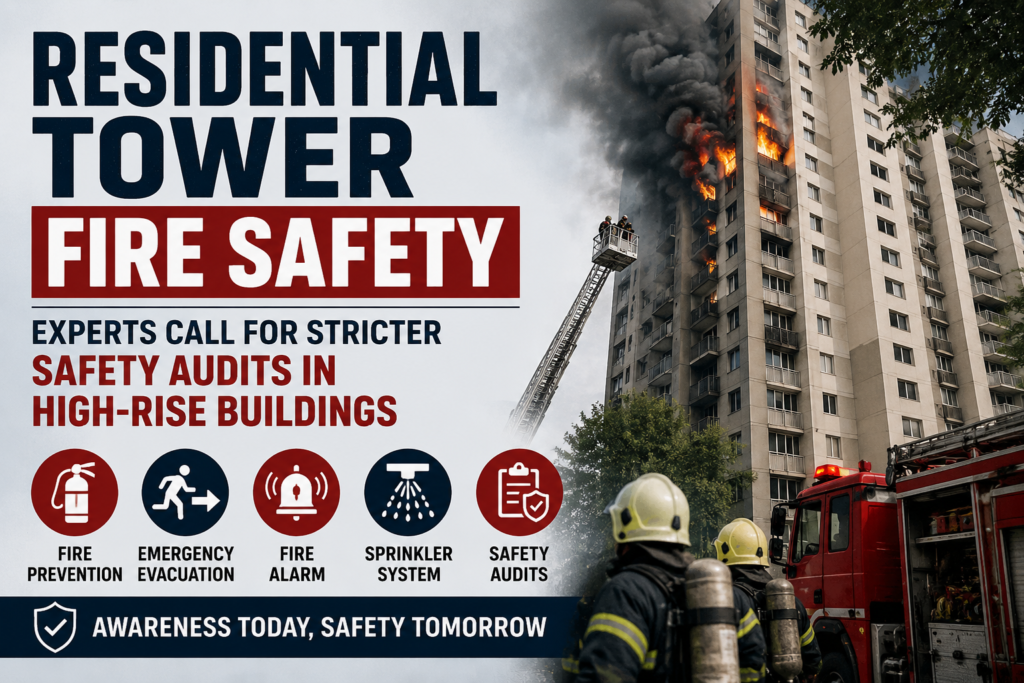
Residential tower fire safety has become a major concern in India’s rapidly growing urban housing sector. Recent fire incidents in high-rise apartment complexes have prompted safety experts, housing societies, and authorities to re-evaluate existing fire prevention measures and emergency response systems.
As cities continue to expand vertically, ensuring the safety of thousands of residents living in residential towers has become more important than ever. Experts believe that regular inspections, modern firefighting infrastructure, and resident awareness programs are essential to reducing fire-related risks.
Residential Tower Fire Safety Under Increased Scrutiny
The growing number of high-rise residential projects across India has increased the importance of maintaining effective fire protection systems. While modern apartment complexes are designed with various safety features, experts warn that inadequate maintenance can reduce their effectiveness during emergencies.
Many residential towers are equipped with:
- Fire alarms
- Smoke detectors
- Sprinkler systems
- Emergency staircases
- Fire extinguishers
- Water storage for firefighting
However, these systems require regular testing and maintenance to function properly when needed.
Advertisement

Why High-Rise Buildings Face Greater Fire Risks
Fire emergencies in multi-storey buildings can be more difficult to manage than in low-rise structures. The height of the building, large number of residents, and complex layouts can create additional challenges during evacuation and rescue operations.
Some common concerns include:
- Delayed evacuation from upper floors
- Smoke accumulation in corridors
- Limited access for firefighting equipment
- Electrical system failures
- Blocked emergency exits
Safety professionals say that addressing these issues requires both infrastructure improvements and resident preparedness.
Importance of Regular Fire Safety Audits
Experts emphasize that residential tower fire safety depends heavily on regular inspections and compliance checks.
Fire safety audits help identify:
- Faulty alarms
- Damaged sprinklers
- Electrical hazards
- Inadequate emergency lighting
- Obstructed evacuation routes
Routine assessments allow housing societies to address safety gaps before they become serious risks.
Advertisement

Emergency Preparedness Can Save Lives
Beyond infrastructure, experts stress the importance of emergency preparedness among residents.
Housing societies are increasingly being encouraged to conduct:
Fire Evacuation Drills
Regular practice helps residents understand evacuation procedures.
Safety Awareness Programs
Educational sessions can improve emergency response and reduce panic.
Staff Training
Security personnel and maintenance teams should receive proper emergency response training.
Prepared communities are often able to respond more effectively during emergency situations.
Also Read:Khan Sir FIR Patna Coaching Centre: What We Know So Far
Technology Improving Residential Tower Fire Safety
Modern technology is playing an increasingly important role in improving residential tower fire safety.
New safety solutions include:
- Smart smoke detection systems
- Automated emergency alerts
- Integrated building management systems
- CCTV-based monitoring
- Digital evacuation guidance
Experts believe these technologies can improve response times and help authorities manage emergencies more efficiently.
Homebuyers Paying Greater Attention to Safety Standards
Fire safety is becoming an important factor for homebuyers when selecting residential properties. Many buyers now evaluate:
- Building safety certifications
- Fire compliance records
- Emergency preparedness plans
- Maintenance standards
- Safety infrastructure availability
Industry analysts believe this growing awareness will encourage developers to prioritize safety in future projects.
Stronger Regulations and Compliance Needed
Urban safety experts continue to advocate for stricter enforcement of fire safety regulations in residential communities. They argue that compliance should not be treated as a one-time requirement but as an ongoing responsibility.
With India’s urban population continuing to grow, maintaining high standards of residential tower fire safety will be critical to protecting residents and ensuring safer living environments in modern cities.