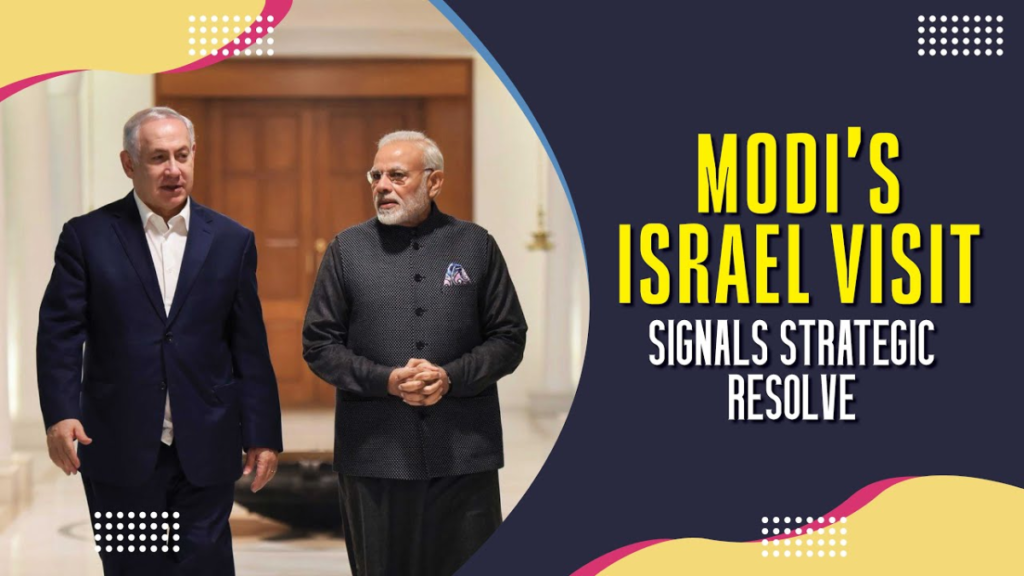
Prime Minister Narendra Modi’s Israel visit is being closely watched at both regional and global levels. The trip is not just a diplomatic formality — it reflects India’s evolving foreign policy priorities, defence needs, and economic ambitions.
Here’s a detailed look at the full agenda, expected outcomes, and why the Modi Israel visit matters strategically.
What Is on the Agenda During PM Modi’s Israel Visit?
The Modi Israel visit includes high-level talks with Israeli leadership focusing on multiple strategic sectors.
Defence and Strategic Security Talks
India and Israel share one of the strongest defence partnerships in the region.
Key discussion areas include:
- Advanced missile defence systems
- Drone and UAV technology
- Cybersecurity cooperation
- Counter-terror intelligence sharing
- Joint military research and production
Israel is among India’s top defence technology partners, and deeper cooperation can strengthen India’s national security framework.
Trade and Investment Expansion
The Modi Israel visit is also expected to focus on increasing bilateral trade. Current trade relations include sectors like:
- Diamonds and precious stones
- Agriculture technology
- Defence equipment
- Pharmaceuticals
Leaders may explore expanding:
- Free trade discussions
- Startup collaboration
- Joint industrial innovation projects
Technology and Innovation Partnership
Israel is globally known for innovation and startup ecosystems. Talks may include collaboration in:
- Artificial Intelligence
- Agri-tech and irrigation systems
- Water recycling and desalination
- Clean energy solutions
India’s growing digital economy can benefit significantly from Israeli tech expertise.
Regional Security and Global Issues
The Modi Israel visit also includes discussions on:
- Stability in West Asia
- Energy security
- Counter-terror strategies
- Global geopolitical realignments
Both countries are navigating complex regional dynamics, making strategic dialogue essential.
IN Why This Visit Matters for India
The Modi Israel visit is important for several reasons:
Strengthening Defence Preparedness
Access to advanced defence systems enhances India’s security capabilities.
Expanding Economic Opportunities
Trade and technology partnerships can boost India’s growth trajectory.
Strategic Balancing in Foreign Policy
India maintains relations with multiple global powers. This visit reinforces India’s multi-alignment strategy.
Boost to Make in India Initiative
Joint defence manufacturing and technology transfer align with domestic production goals.
Expected Outcomes of the Modi Israel Visit
- Signing of new MoUs in defence and innovation
- Increased joint research and development programs
- Greater investment cooperation
- Strengthened diplomatic engagement
Even if no major agreements are signed immediately, the visit sets the stage for long-term collaboration.
The Bigger Diplomatic Picture
The Modi Israel visit reflects India’s evolving global strategy. India is deepening ties with strategic partners while maintaining independent foreign policy decisions.
Over the past decade, India-Israel relations have expanded beyond defence to include agriculture, water management, and advanced technology.
In the broader geopolitical context, this visit signals:
- India’s active engagement in West Asia
- Focus on national security modernization
- Long-term economic diplomacy
Conclusion
The Modi Israel visit is more than a bilateral meeting — it represents India’s ambition to strengthen defence, boost trade, and enhance its global diplomatic presence.
As global alliances shift, such high-level engagements play a crucial role in shaping India’s future strategic direction.