
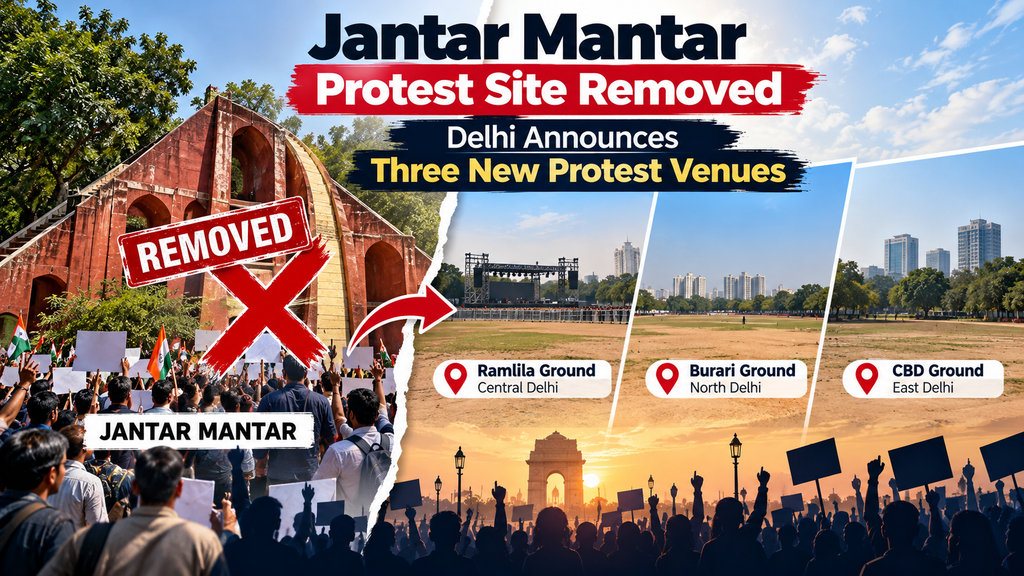
Jantar Mantar has long been one of the most recognised locations for public demonstrations in New Delhi. From political campaigns to public demands and social movements, the area has played an important role in bringing issues into public discussion. However, a recent decision has changed its status as an officially designated protest venue.
The news that the Jantar Mantar protest site has been removed from the official list has attracted attention because of the location’s historical importance. Delhi Police has announced three alternative venues where demonstrations can be organised under the new arrangement.
Why Was Jantar Mantar Removed as a Protest Site?
According to reports published on October 12, 2026, Jantar Mantar Protest Site Removed from Delhi Police’s list of designated locations for protests and demonstrations. The decision follows recommendations made by a committee constituted by the Union Home Ministry to examine alternative venues.
The updated order modifies the previous arrangements for designated protest locations in the capital. Authorities have identified three other grounds for public demonstrations, while detailed operating procedures for the new venues are expected to be issued separately.
The change concerns Jantar Mantar’s official designation as a protest venue. It does not mean that the historic monument itself has been removed.

Three New Protest Locations Announced in Delhi
Delhi Police has identified the following locations as alternatives for organising protests and demonstrations:
- Ramlila Ground: Located in Central Delhi, this ground has previously hosted major public gatherings and political events.
- Burari Ground: Situated in North Delhi, it has been designated as another venue for demonstrations.
- CBD Ground: Located in East Delhi, this ground completes the list of three newly designated locations.
These venues are expected to provide alternative spaces for public gatherings under the revised arrangements. Organisers will need to follow the applicable permission requirements and guidelines for their proposed events.
The practical impact of this change will depend on how the new arrangements are implemented, including the application process and conditions for holding demonstrations.
Why Jantar Mantar Has Historical Importance
Jantar Mantar became an important protest location because of its position in central Delhi and its proximity to major government institutions. Over the years, it has provided a visible place for citizens, activists, political groups, and organisations to raise public concerns.
The location has been associated with different movements and campaigns involving social issues, government decisions, and demands for policy changes. Its visibility has made it a familiar reference point in discussions about peaceful demonstrations in India.
Its history also reflects the challenge of balancing public gatherings with traffic management, neighbourhood concerns, security, and the need for accessible protest venues.
Also visit us: Can AI Replace Models? The Future of Modeling in India
What Does This Decision Mean for Protest Organisers?
The removal of Jantar Mantar from the designated protest-site list means organisers will need to consider the newly identified locations when planning demonstrations.
Several practical points will be important under the revised arrangements:
- Checking the latest Delhi Police guidelines before planning an event.
- Applying for permission through the appropriate process.
- Confirming the venue’s conditions and permitted gathering arrangements.
- Understanding any restrictions related to crowd management, security, and public order.
- Informing participants about the approved location and relevant instructions.
The announcement does not remove the constitutional importance of freedom of speech and peaceful assembly. However, these rights are subject to lawful and reasonable restrictions. The implementation of the new arrangements will be important in determining how people can organise demonstrations in practice.
Public Discussion Around the Change
The decision has raised questions about the future of public demonstrations in central Delhi. Jantar Mantar’s location has historically offered protesters visibility and proximity to important institutions. Moving designated gatherings to other areas may change how organisers plan events and how easily participants can reach them.
At the same time, authorities have to consider public safety, traffic, security, and the practical requirements of managing large gatherings.
The key issue is how the alternative venues will work in practice. Clear permission procedures, accessible locations, and transparent rules will be important for both organisers and the authorities.
Conclusion
The Jantar Mantar Protest Site Removed decision marks a significant change in Delhi’s arrangements for public demonstrations. As announced on October 12, 2026, Ramlila Ground, Burari Ground, and CBD Ground in East Delhi have been identified as alternative locations.
Jantar Mantar remains an important part of Delhi’s public history, even as its official role as a designated protest venue changes. The impact of this decision will become clearer as the revised procedures are implemented and organisers adapt to the new arrangements.