
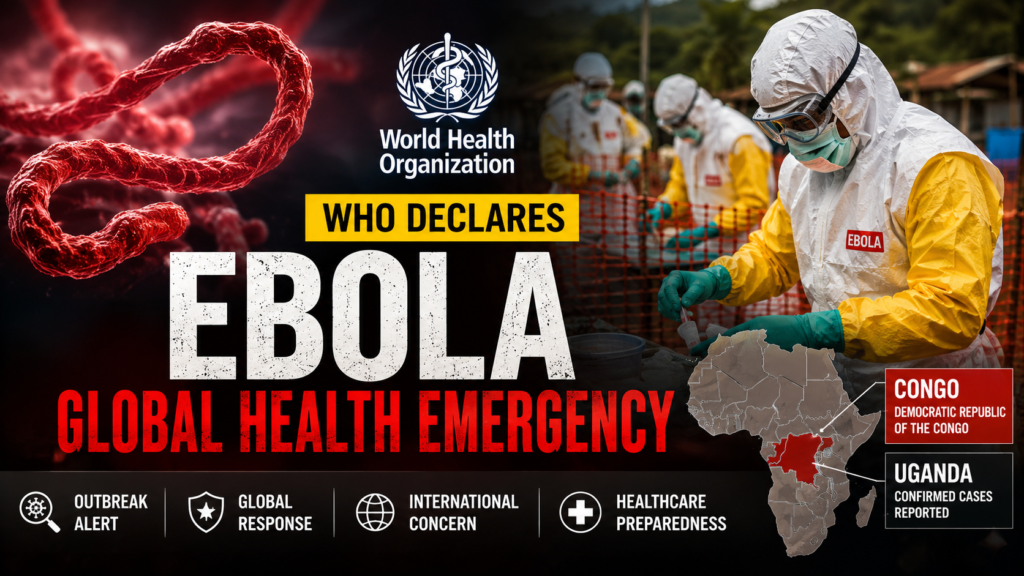
The latest Ebola Virus News has once again placed global health agencies on high alert after the World Health Organization (WHO) declared the ongoing outbreak a Public Health Emergency of International Concern (PHEIC). The announcement has drawn worldwide attention as health experts monitor the situation closely and prepare measures to prevent wider transmission.
The decision by WHO comes after growing concerns surrounding Ebola cases and the possibility of cross-border spread. Health officials believe quick international action is essential to reduce risks and strengthen healthcare responses in affected areas.
The declaration immediately triggered discussions among governments, healthcare organizations, and international agencies. Many experts say early intervention is one of the strongest defenses against infectious disease outbreaks.
For many people, one important question is emerging: How serious is the current situation, and what does it mean for the world?
Advertisement

Also Read :- Wrong Kidney Removal Case: ₹2 Crore Compensation Awarded After Shocking Medical Error
Why WHO Declared an Emergency
WHO reserves the Public Health Emergency of International Concern designation for events that pose a serious health risk and require international cooperation.
Several reasons contributed to the decision, including:
- Concerns about possible spread beyond affected regions
- Pressure on local healthcare systems
- Increased need for international funding and support
- Importance of rapid monitoring and containment efforts
- Risk associated with population movement across borders
Health experts explain that the emergency declaration does not automatically mean a worldwide outbreak is expected. Instead, it acts as a warning mechanism designed to speed up response efforts before conditions become more difficult.
The focus remains on prevention, rapid action, and minimizing risk.
Advertisement

Ebola Virus News: Understanding the Disease
Ebola is a severe viral disease that spreads mainly through direct contact with infected bodily fluids or contaminated materials. Human transmission can occur through close contact with infected individuals or exposure to infected animals.
Symptoms of Ebola may initially appear similar to other illnesses, which can sometimes make early identification difficult.
Common symptoms include:
- Fever
- Severe headache
- Fatigue
- Muscle pain
- Vomiting
- Diarrhea
- Unexplained bleeding in severe cases
Medical professionals say early detection remains extremely important because faster treatment improves the chances of survival.
Researchers have also developed vaccines and treatment methods in recent years, helping health systems respond more effectively compared to earlier outbreaks.
Ebola Virus News: Countries Increase Monitoring Measures
Following WHO’s announcement, multiple countries and health agencies have strengthened surveillance efforts.
Authorities are focusing on:
- Airport and border screening measures
- Contact tracing programs
- Rapid testing systems
- Isolation facilities
- Public awareness campaigns
Health officials continue emphasizing that misinformation can create unnecessary fear. They encourage people to rely on trusted health organizations and verified updates.
Global experts say preparedness and awareness remain essential tools during outbreaks.
What Could Happen Next?
Health organizations are continuing to monitor transmission trends and evaluate ongoing containment efforts. International agencies may increase support through medical resources, emergency funding, and deployment of healthcare professionals.
Experts say the coming weeks could play a major role in determining how effectively the outbreak is controlled.
Current Ebola Virus News suggests that authorities are taking precautionary measures early to avoid larger challenges later. Public health specialists stress that staying informed through reliable sources remains one of the most important steps for communities worldwide.
While health officials continue to monitor developments, the international response reflects one clear message: prevention and rapid action remain the strongest defense against infectious disease threats.