
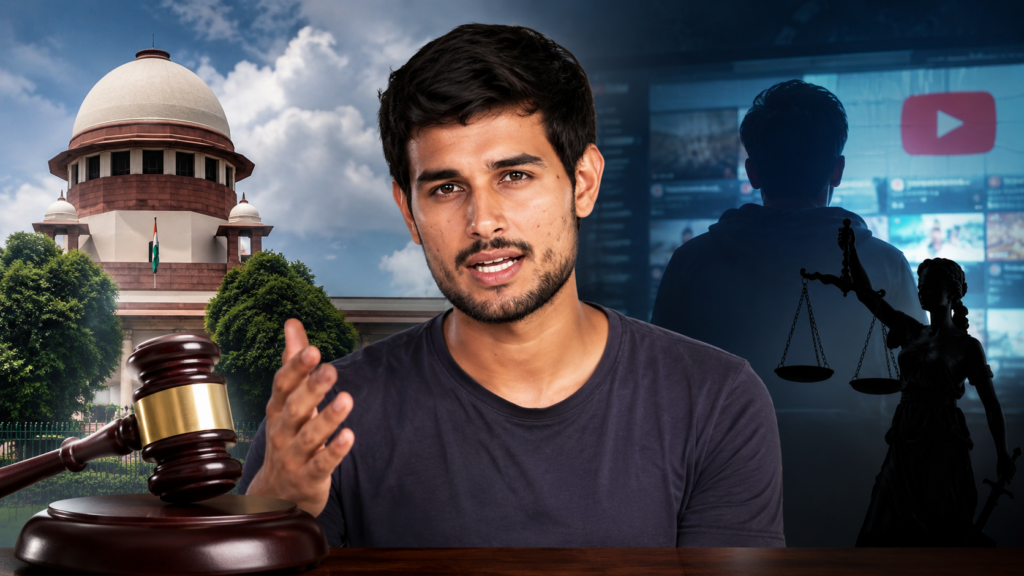
The Dhruv Rathee Video Controversy has reached the Delhi High Court, where the court has directed the Grievance Appellate Committee (GAC) to decide an appeal concerning one of the YouTuber’s videos within 15 days. The case revolves around allegations that the video’s content hurt religious sentiments and contained statements about Hindu deities that several petitioners found objectionable.
While hearing the matter, the High Court emphasized that content capable of hurting religious sentiments should be examined carefully. However, instead of ruling directly on the video’s legality, the court instructed the statutory appellate body to decide the pending appeal within the prescribed time frame.
Background of the Controversy
The controversy began after a video published by YouTuber Dhruv Rathee drew criticism from several groups and individuals. According to the petition filed before the court, the video allegedly included remarks related to Lord Ram, Goddess Sita, and Lord Krishna while discussing historical and dietary practices.
The petitioners argued that these statements were offensive and had the potential to hurt the religious beliefs of millions of Hindus. They further claimed that such content could create social disharmony and requested that the video be removed from online platforms.
The matter was first taken before the Grievance Appellate Committee (GAC), the government-established body that hears appeals related to decisions made by social media grievance officers. As the appeal remained pending, the petitioners approached the Delhi High Court seeking urgent intervention.

What Did the Delhi High Court Say?
During the hearing, the Delhi High Court observed that content affecting religious sentiments should be treated seriously and noted that such matters require timely consideration. The court reportedly remarked that content capable of hurting public emotions should not be ignored and directed the GAC to dispose of the appeal within 15 days.
Importantly, the High Court did not make a final determination on whether the video violated any law or direct that it be taken down. Instead, it asked the competent authority to examine the matter and pass an appropriate order after considering all relevant facts.
Petitioners’ Arguments
According to the petition, the video allegedly presented historical claims in a manner that offended religious sentiments. The petitioners contended that public platforms with a large audience carry greater responsibility when discussing topics connected to religion and culture.
They requested appropriate action under applicable legal provisions and sought removal of the disputed content, arguing that it could disturb communal harmony.
Dhruv Rathee’s Position
At the time of publication, there has been no final judicial finding against Dhruv Rathee regarding the allegations raised in the petition. The legal process remains ongoing, and the matter is currently before the Grievance Appellate Committee as directed by the High Court.
Any final decision regarding the disputed video will depend on the findings of the GAC after reviewing the appeal.
Why the Case Matters
The Dhruv Rathee Video Controversy has once again highlighted the balance between freedom of expression and respect for religious beliefs in India’s digital space.
The case also underscores the growing role of statutory bodies such as the GAC in addressing disputes related to online content. As digital platforms continue to expand, questions surrounding content moderation, public responsibility, and legal accountability are becoming increasingly significant.
Also Read: New Car Launches in July 2026: Brezza Facelift, Nissan Tekton SUV Among Key Highlights
Conclusion
The Delhi High Court’s direction does not represent a final verdict on the disputed video but ensures that the pending appeal receives a timely decision. The Grievance Appellate Committee has now been asked to examine the matter and issue its findings within 15 days.
Until that process is completed, the controversy remains under legal consideration. The outcome of the GAC’s decision could provide further clarity on how sensitive religious content shared on digital platforms is assessed under India’s existing legal framework.