
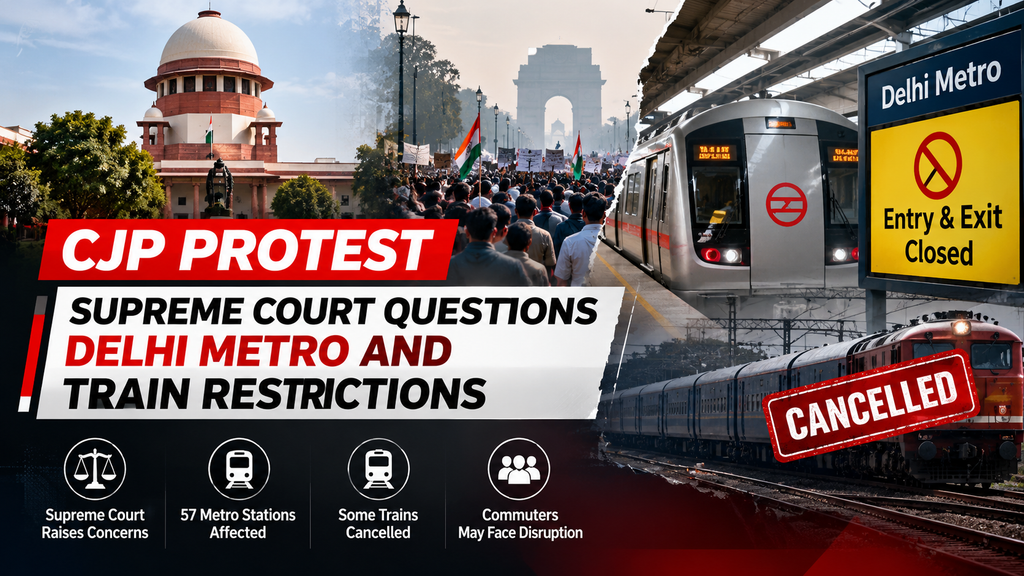
The planned CJP Protest in Delhi has raised concerns about public transport arrangements ahead of the demonstration scheduled for October 10, 2026. On October 9, the Supreme Court questioned restrictions affecting metro stations and railway services, highlighting the difficulties that commuters could face if transport options were widely reduced.
The court stressed that security planning should consider the needs of ordinary passengers. While authorities can introduce measures to manage crowds, the court said that essential public transport should not be brought to a complete standstill without proper consideration.
Why Is the CJP Protest in the News?
The CJP Protest became a major issue for commuters after restrictions were announced at several Delhi Metro stations ahead of the planned gathering. According to the report, 57 stations were affected by the advisory, with entry and exit gates scheduled to close from 9 pm on October 9.
Railway services were also disrupted, with some trains scheduled to arrive at New Delhi and Hazrat Nizamuddin stations reportedly cancelled.
These measures raised questions about how security arrangements would affect people travelling for work, education, medical appointments, and other everyday needs.

Supreme Court Raises Concerns About Commuters
During the hearing, the Supreme Court expressed concern about the impact of widespread metro and railway restrictions. The court noted that people travel to Delhi from areas such as Gurugram and Greater Noida and depend on public transport for their daily journeys.
The judges emphasised that commuters have a right to access basic facilities. They also highlighted the difference between regulating transport services and completely shutting them down.
The court asked the authorities to reconsider the number of metro stations affected and review road closures where necessary.
Can Security Measures Continue Without Stopping Public Transport?
Managing a large demonstration may require crowd control, traffic diversions, and additional security arrangements. However, such measures can also affect people who are not participating in the protest.
The Supreme Court indicated that authorities should adopt proportionate restrictions based on the situation in each area. It also observed that metro frequency could be reduced when required, rather than stopping services entirely.
This approach would allow security agencies to address potential risks while reducing unnecessary disruption to daily travel.
Government Response to the Court’s Observations
During the hearing, Solicitor General Tushar Mehta told the court that he would consult the government regarding the restrictions. He assured the court that proportionate measures would be considered.
The court also directed attention towards road closures, asking that areas requiring restrictions be assessed separately from those where normal movement could continue.
The final transport arrangements would depend on the measures adopted by the relevant authorities.
What Should Delhi Commuters Keep in Mind?
People planning to travel during the CJP Protest should check official Delhi Metro Rail Corporation (DMRC) announcements and railway updates before starting their journeys.
A few practical steps can help reduce travel problems:
- Check whether your boarding or destination station is affected.
- Confirm train schedules before travelling to a railway station.
- Allow additional time for possible diversions and delays.
- Follow official traffic and public transport advisories.
Travel arrangements can change depending on security requirements, so the latest official updates are more reliable than older notices.
Also visit us: Nana Patekar: A Legacy Built On Powerful Acting And Unforgettable Characters
Conclusion
The Supreme Court’s observations during the CJP Protest hearing have highlighted the need to balance public security with the everyday needs of commuters. The court questioned broad restrictions on metro and railway services and called for proportionate measures that would avoid unnecessary disruption.
As Delhi prepares for the planned demonstration, clear communication and updated travel information will remain important for residents and visitors moving around the city.