
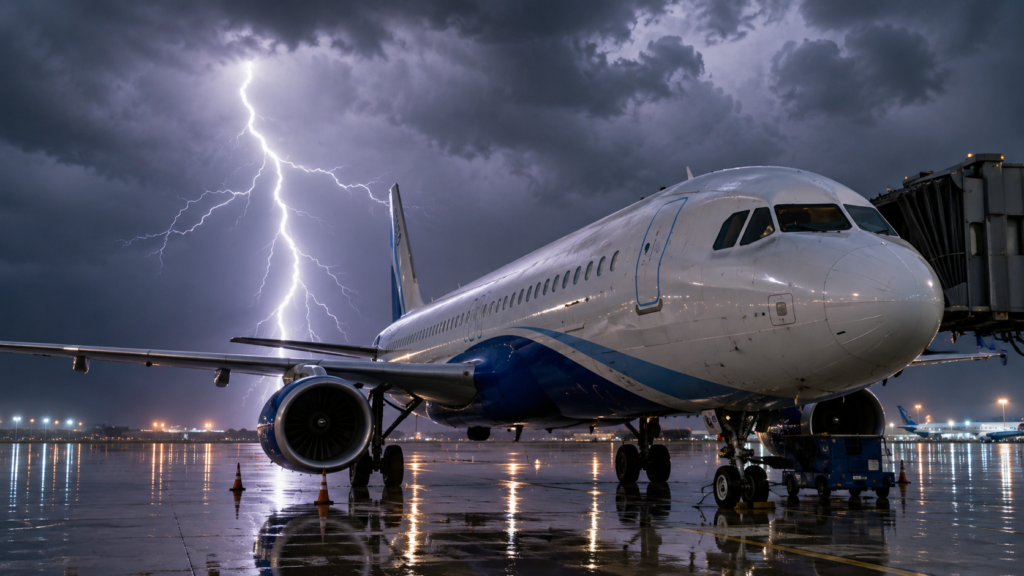
Indigo Plane Lightning Strike made headlines on June 19 after an Indigo aircraft parked at Kolkata’s Netaji Subhas Chandra Bose International Airport was struck by lightning during adverse weather conditions. The incident occurred before the aircraft’s scheduled departure to Agartala and immediately prompted a detailed safety inspection.
Authorities confirmed that no passengers, crew members, or airport personnel were injured during the incident. While the event raised concerns among travelers, aviation officials emphasized that modern commercial aircraft are specifically designed to withstand lightning strikes.
The aircraft remained grounded temporarily while engineers carried out mandatory inspections to ensure complete operational safety before allowing the aircraft to resume service.
Advertisement

Also Read :- Petrol Diesel Prices Today: Latest Fuel Rates Announced Across Major Indian Cities
Indigo Plane Lightning Strike Occurred During Severe Weather Conditions
The Indigo aircraft was stationed on the airport apron when lightning struck during a thunderstorm affecting parts of Kolkata.
According to airport and airline officials, the aircraft was not airborne at the time of the incident. Ground crews immediately informed maintenance teams, and aviation safety procedures were activated without delay.
Key Incident Highlights
- Indigo aircraft struck by lightning at Kolkata Airport.
- Flight was scheduled to operate between Kolkata and Agartala.
- No injuries reported among passengers or crew.
- Aircraft underwent mandatory technical inspections.
- Flight operations experienced temporary delays.
- Safety protocols were implemented immediately.
Advertisement

Why Aircraft Undergo Inspection After Lightning Strikes?
Commercial aircraft are engineered with advanced lightning protection systems that safely channel electrical energy around the aircraft structure.
However, aviation regulations require airlines to conduct detailed inspections whenever a lightning strike occurs.
Engineers typically inspect:
- Aircraft fuselage
- Wings and control surfaces
- Electrical systems
- Communication equipment
- Navigation systems
- Radar components
Only after receiving technical clearance can the aircraft return to service.
Modern Aircraft Are Designed to Handle Lightning Strikes
Although lightning strikes may appear alarming, aviation experts state that such incidents are not uncommon in the aviation industry.
Modern aircraft incorporate conductive materials and specialized engineering that help minimize the impact of lightning.
These safety measures are designed to protect:
- Passengers
- Flight crew
- Aircraft systems
- Communication networks
- Navigation equipment
The Kolkata incident serves as an example of how aviation safety standards function effectively during unexpected weather-related events.
Passenger Safety Remained the Highest Priority
Indigo and airport authorities prioritized passenger safety following the incident.
Rather than rushing the aircraft into operation, engineers completed a thorough assessment to ensure every system was functioning correctly.
Officials confirmed that all established aviation safety protocols were followed throughout the inspection process.
Was anyone injured in the Indigo plane lightning strike?
No. Authorities confirmed that there were no injuries to passengers, crew members, or ground staff.
Why was the flight delayed after the lightning strike?
The flight was delayed because the aircraft required mandatory safety inspections before receiving operational clearance.
Important News Points at a Glance
- Incident Date: June 19, 2026
- Airline: Indigo
- Location: Kolkata Airport
- Route: Kolkata to Agartala
- Cause: Lightning strike during severe weather
- Casualties: None
- Aircraft Status: Inspected by engineering teams
- Operational Impact: Temporary delay
The Indigo Plane Lightning Strike incident highlights the effectiveness of modern aviation safety systems and emergency response procedures. While the event caused temporary disruption, the absence of injuries and the successful implementation of safety protocols ensured that passenger safety remained fully protected.