
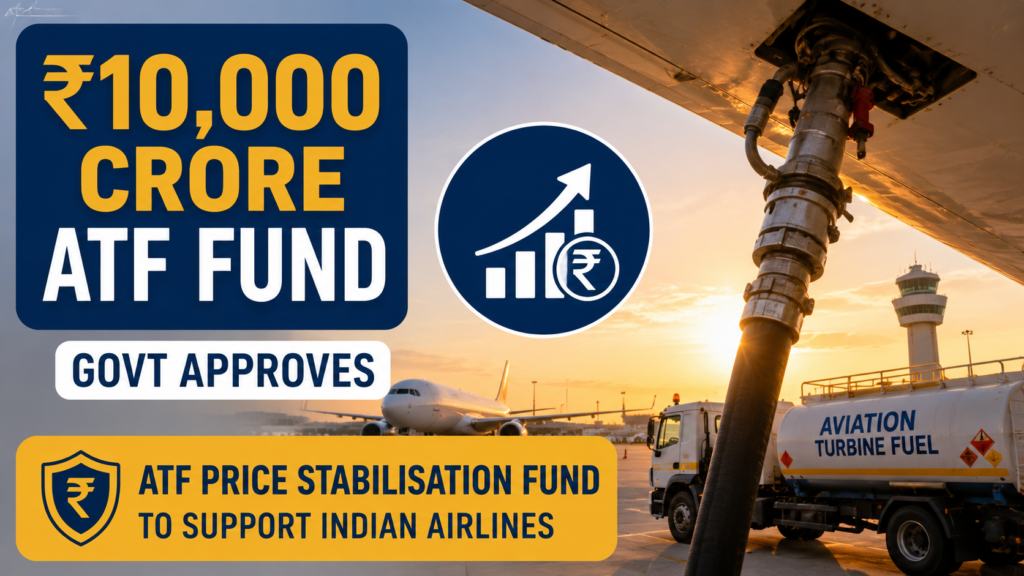
ATF Price Stabilisation Fund has become one of the most significant policy decisions for India’s aviation sector in 2026, as the Union Cabinet approved a ₹10,000 crore fund designed to protect airlines from sudden spikes in aviation turbine fuel prices.
The announcement comes at a crucial time when large parts of North, Northwest, and Central India are battling intense heatwave conditions. With the India Meteorological Department issuing red alerts across several regions, policymakers are focusing on maintaining stability in critical sectors, including aviation.
The newly approved ATF Price Stabilisation Fund is expected to provide a financial buffer for airlines whenever global fuel markets experience extreme volatility. Industry experts believe the move could help airlines manage operational costs more effectively while reducing the impact of sudden fuel price shocks on passengers.
As temperatures continue to soar and travel demand remains strong, the government’s latest decision is drawing attention across the aviation industry.
Advertisement

Also Read :- Motorola Edge 70 Pro Plus Set to Shake Up the Premium Smartphone Market
ATF Price Stabilisation Fund Designed to Protect Airlines From Fuel Price Volatility
The primary objective of the ATF Price Stabilisation Fund is to shield Indian airlines from unpredictable fluctuations in aviation turbine fuel prices.
Fuel remains one of the largest expenses for airlines, often accounting for a substantial portion of overall operating costs. Even small increases in jet fuel prices can significantly affect airline profitability.
Under the new framework, the ATF Price Stabilisation Fund will help reduce the financial burden created by sudden global energy market disruptions.
Officials believe that a more stable fuel pricing environment could encourage long-term planning and strengthen the resilience of India’s rapidly expanding aviation sector.
The initiative is also expected to support airline competitiveness as carriers continue expanding domestic and international operations.
Advertisement

Why Aviation Turbine Fuel Prices Matter So Much
The importance of the ATF Price Stabilisation Fund becomes clearer when examining the role of fuel in airline economics.
Aviation turbine fuel is one of the most critical inputs for airline operations. When fuel prices rise sharply, airlines often face difficult choices.
These may include:
- Increasing ticket prices
- Reducing routes
- Cutting operational expenses
- Delaying expansion plans
- Managing capacity more cautiously
The ATF Price Stabilisation Fund seeks to reduce these risks by creating a mechanism that can absorb some of the financial impact caused by fuel market volatility.
Industry observers believe this could help airlines maintain more predictable pricing strategies for travelers.
Government Sees Aviation as a Strategic Growth Sector
The approval of the ATF Price Stabilisation Fund reflects the government’s broader commitment to strengthening India’s aviation ecosystem.
India remains one of the world’s fastest-growing aviation markets. Rising passenger numbers, airport expansion projects, and increased regional connectivity have transformed the sector over the past decade.
Officials view aviation as a key driver of:
- Economic growth
- Tourism development
- Business connectivity
- Employment generation
- Regional development
The ATF Price Stabilisation Fund is expected to complement these objectives by improving financial stability across the industry.
Experts suggest that reducing uncertainty around fuel costs could encourage airlines to invest more confidently in fleet expansion and route development.
Heatwave Conditions Add to Operational Challenges
The announcement of the ATF Price Stabilisation Fund comes as India experiences one of the most intense heatwave periods of the year.
The India Meteorological Department has issued red alerts for several northern, northwestern, and central regions, warning of exceptionally high temperatures over multiple days.
Extreme weather conditions can create additional challenges for airlines, including:
- Higher energy consumption
- Increased operational monitoring
- Airport infrastructure stress
- Passenger comfort concerns
- Potential scheduling adjustments
While the ATF Price Stabilisation Fund is focused specifically on fuel costs, its introduction during a period of severe weather highlights the importance of building resilience across transportation networks.
Authorities continue to monitor weather developments closely as temperatures remain significantly above normal levels in several areas.
How the Fund Could Benefit Travelers
Many passengers are asking whether the ATF Price Stabilisation Fund could eventually influence ticket prices.
Short Answer
Potentially, yes.
When airlines experience less financial pressure from fuel price spikes, they may gain greater flexibility in managing fares.
Although ticket pricing depends on multiple factors, industry analysts note that stabilizing fuel costs can help reduce sudden fare increases linked to energy market disruptions.
The ATF Price Stabilisation Fund is therefore viewed as a measure that could indirectly benefit consumers while supporting airline sustainability.
However, experts caution that global market conditions and travel demand will continue to influence pricing decisions.
Industry Experts Welcome the Decision
The aviation industry has largely responded positively to the introduction of the ATF Price Stabilisation Fund.
Experts argue that fuel price volatility remains one of the biggest risks facing airlines worldwide.
A dedicated stabilization mechanism could offer several advantages:
- Better financial planning
- Improved cash flow management
- Reduced exposure to global fuel shocks
- Greater operational predictability
- Enhanced investor confidence
The ATF Price Stabilisation Fund is also expected to strengthen the sector’s ability to withstand future economic uncertainties.
Industry stakeholders believe the measure demonstrates a proactive approach toward supporting long-term aviation growth.
What Happens Next?
With Cabinet approval secured, attention now shifts toward the implementation framework for the ATF Price Stabilisation Fund.
Authorities are expected to outline operational guidelines, eligibility criteria, and mechanisms governing fund utilization.
Aviation companies will closely monitor these details to understand how the program can support their financial planning strategies.
Meanwhile, the broader economic environment remains influenced by both global energy markets and domestic weather conditions.
The combination of extreme heatwave alerts and fluctuating fuel costs has underscored the importance of preparedness across multiple sectors.
Why This Decision Could Shape the Future of Indian Aviation
The ATF Price Stabilisation Fund represents more than a financial support mechanism. It signals a long-term policy effort to strengthen one of India’s most important growth industries.
As passenger demand continues to rise and airlines expand operations, managing fuel-related risks will remain essential.
The government’s ₹10,000 crore initiative aims to provide a safeguard against one of the aviation sector’s biggest uncertainties.
At a time when India is facing both challenging weather conditions and evolving economic pressures, the ATF Price Stabilisation Fund may become a critical tool in ensuring stability, competitiveness, and sustainable growth for Indian airlines in the years ahead.