
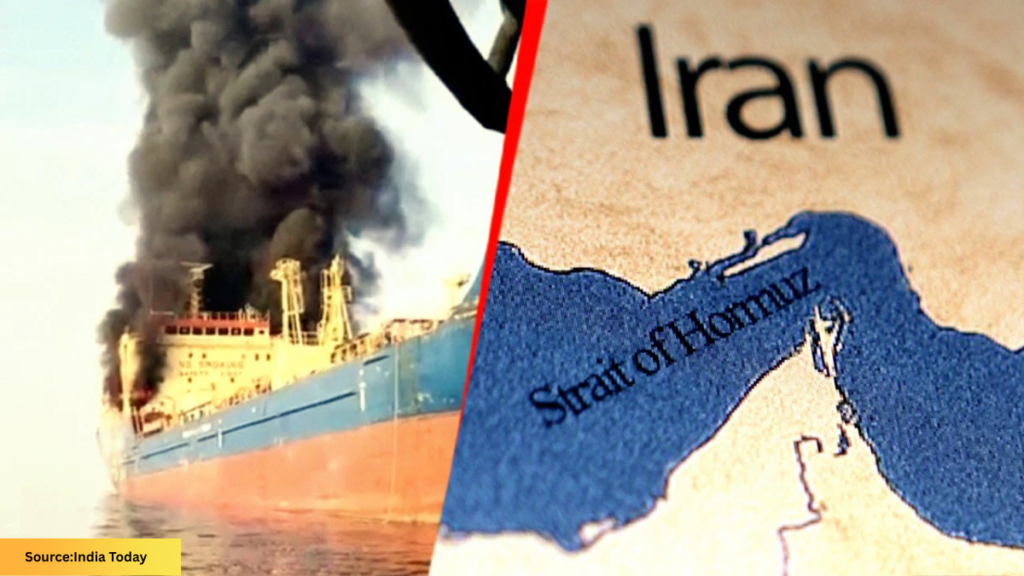
Global energy markets are closely watching developments in the Strait of Hormuz, where several oil shipments remain stuck following rising tensions between the United States and Iran. The situation has created uncertainty in international oil trade and raised concerns about disruptions in one of the world’s most critical energy routes.
The issue emerged after the United States claimed that oil shipments linked to Iranian trade violations needed to be halted. Iran, however, rejected the accusations and refused to comply with the demands, insisting that the oil shipments are legitimate.
The standoff has resulted in tankers remaining stranded near the Strait of Hormuz, a narrow waterway through which nearly one-fifth of the world’s oil supply passes.
Strait of Hormuz Oil Crisis: Why Tankers Are Stuck
The Strait of Hormuz oil crisis developed after conflicting claims between Washington and Tehran.
Key points behind the standoff include:
- The US alleging sanctions violations related to oil trade
- Iran denying the allegations and refusing to change its shipping plans
- Oil tankers delaying movement due to security concerns
- Shipping companies waiting for clearer instructions
Because the strait is a strategic chokepoint, any disruption can quickly impact global energy markets.
Why the Strait of Hormuz Matters for Global Oil Supply
The Strait of Hormuz connects the Persian Gulf to global shipping lanes and is considered one of the most important energy routes in the world.
Approximately 20% of global oil exports pass through this narrow channel daily. Any tension or blockade could lead to:
- Rising global oil prices
- Supply disruptions for major economies
- Increased geopolitical tensions in the Middle East
Impact of the Strait of Hormuz Oil Situation on Global Markets
Energy analysts warn that prolonged uncertainty in the Strait of Hormuz oil situation could influence oil prices and shipping insurance costs.
Possible effects include:
- Higher fuel prices worldwide
- Increased military presence in the region
- Diplomatic negotiations between global powers
Markets are now monitoring diplomatic signals from both Iran and the United States to see whether tensions ease.
What Happens Next in the Strait of Hormuz Oil Dispute
Experts believe the situation may move toward negotiations or international mediation. If tensions escalate further, it could affect global trade routes and energy supplies.
For now, oil shipments remain delayed while governments and shipping companies assess the evolving geopolitical situation.