
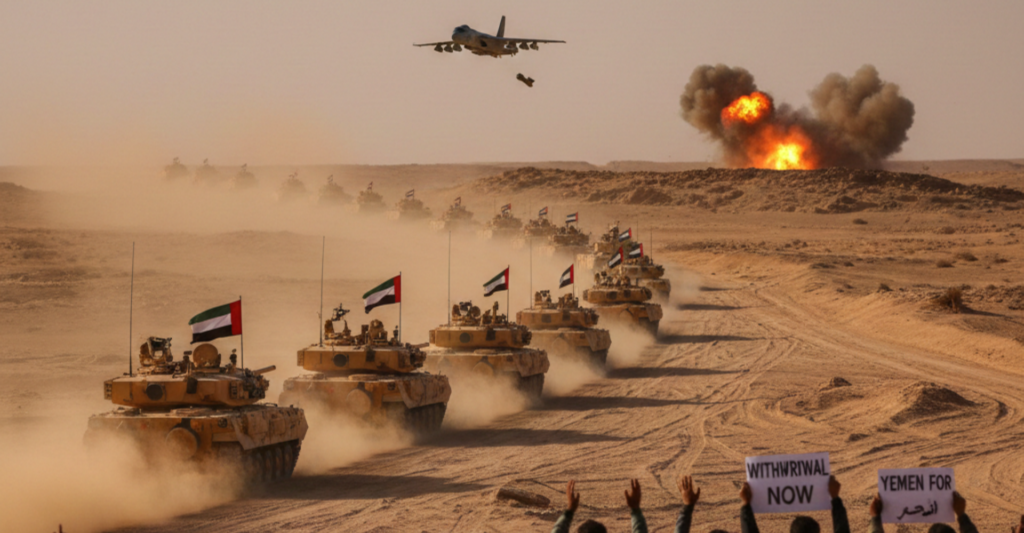
The United Arab Emirates has announced plans to withdraw its military forces from Yemen following renewed international calls for de-escalation and a recent Saudi-led airstrike. The decision highlights shifting regional calculations as the long-running conflict continues to exact a heavy humanitarian and political toll.
Strategic adjustment amid regional pressure
The UAE’s decision marks a notable adjustment in its Yemen policy after years of active involvement as part of the Saudi-led coalition. Emirati officials described the move as a strategic redeployment rather than a complete withdrawal, emphasizing a transition away from direct combat operations. The announcement comes shortly after a Saudi airstrike reignited criticism from global human rights groups and diplomatic actors.
Since 2019, the UAE has gradually reduced its frontline presence, focusing on counterterrorism operations, training local allied forces, and safeguarding key maritime routes near the Red Sea and Gulf of Aden. Analysts believe Abu Dhabi is seeking to limit military exposure while maintaining influence through political and security partnerships. The drawdown also reflects growing concerns over regional instability and the reputational costs of continued military engagement.
Regional, Political, and Humanitarian Implications
- Renewed Diplomatic Pressure: International organizations and Western governments continue to push for ceasefire agreements and inclusive peace talks.
- Saudi-UAE Coordination: Despite the withdrawal, the UAE maintains strategic alignment with Saudi Arabia on regional security objectives.
- Humanitarian Crisis: Yemen remains gripped by famine risk, disease outbreaks, and displacement affecting millions of civilians.
- Impact on Southern Yemen: UAE-backed factions, particularly in the south, may gain greater autonomy amid reduced direct oversight.
- Security Commitments: Abu Dhabi insists it will continue counterterrorism efforts against extremist groups like Al-Qaeda.
- Regional Signaling: The move may encourage other coalition members to reconsider their military roles.
- Conflict Fatigue: Years of stalemate have increased pressure on regional powers to seek political solutions.
The UAE’s decision to pull forces out of Yemen reflects a broader shift toward strategic restraint in a conflict that has proven costly and complex. While military disengagement alone may not end the war, it could help create momentum for diplomacy. The future of Yemen now hinges on whether regional and international actors can convert withdrawals into meaningful peace efforts.