
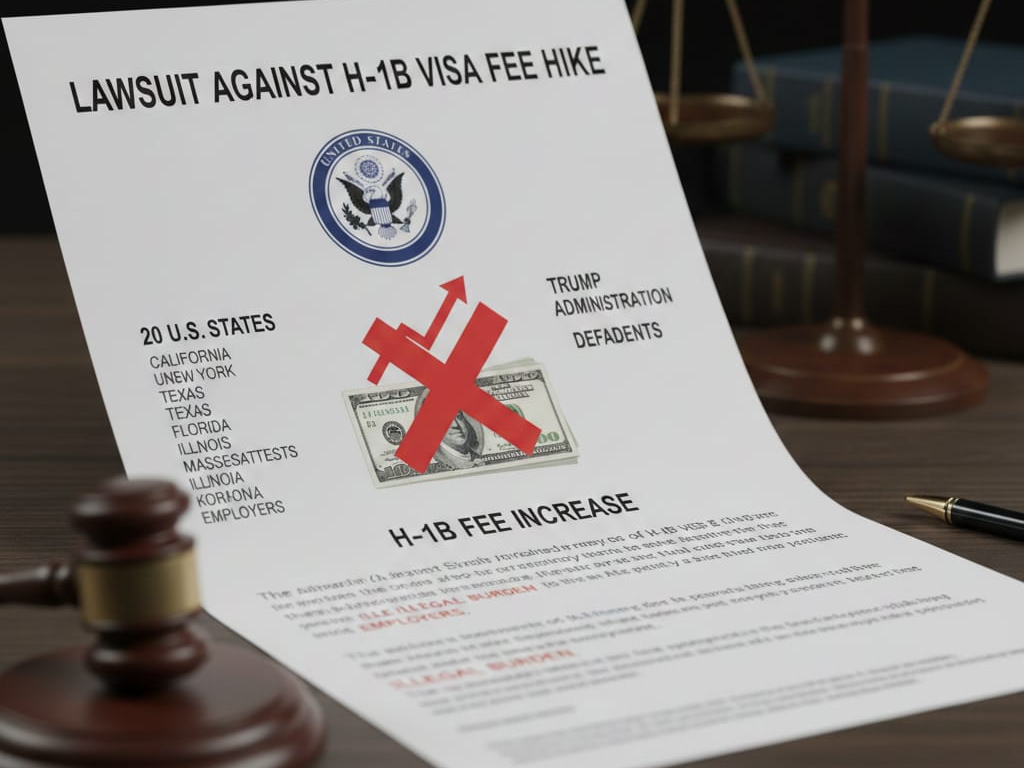
Around 20 U.S. states have filed a lawsuit against the Trump administration over its decision to sharply increase the H-1B visa fee to $100,000. The states argue that the sudden hike puts an unfair financial burden on employers and could negatively affect key public services.
The H-1B visa program allows U.S. companies and institutions to hire skilled foreign workers, especially in sectors like technology, healthcare, education, and research. State officials say the new fee is excessively high and may discourage employers from hiring the talent they need.
What is the issue about?
- The U.S. government has proposed a $100,000 fee for H-1B visa applications.
- This is a huge jump from the earlier visa costs.
- Employers say the increase makes hiring skilled workers very expensive.
Why the states are opposing the move?
- State governments claim the fee was introduced without proper legal process.
- They argue it will hurt schools, hospitals, universities, and public institutions that depend on skilled foreign workers.
- States fear this could worsen staff shortages, especially in healthcare and education
Who is involved?
- The lawsuit is led by California, along with nearly 20 other states.
- Top legal officials from different states are fighting the policy in court
Government’s view
- The Trump administration says the move is meant to protect American jobs.
- Officials believe the higher fee will reduce misuse of work visas and encourage hiring local workers.
Concerns raised by critics
- Critics say the fee could slow down innovation and affect industries that rely on global talent.
- Small companies and public institutions may struggle to afford the new cost.
- There are worries that the policy could hurt the U.S. economy in the long run.
Conclusion:
The legal challenge highlights growing tension over U.S. immigration policy. While the government says the visa fee hike protects domestic jobs, states argue it could harm public services and economic growth. The court’s decision will be important in deciding the future of skilled foreign workers in the U.S.