
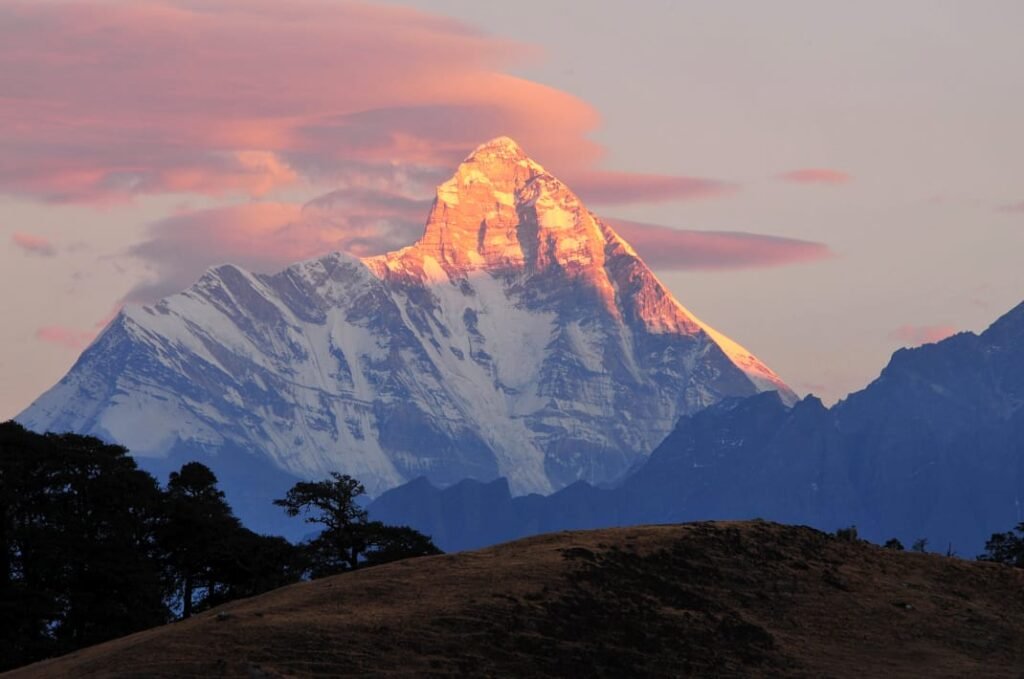
In the mid-1960s, at the height of the Cold War, India and the United States carried out one of their most secretive intelligence collaborations deep in the Himalayas. The joint operation, involving India’s Intelligence Bureau (IB) and the U.S. Central Intelligence Agency (CIA), aimed to monitor China’s nuclear and missile activities following Beijing’s first nuclear test in 1964. The mission focused on Nanda Devi, India’s second-highest peak at 7,816 metres, located close to the origins of the Ganga river system.
What was the device?
The object placed on Nanda Devi was not a nuclear bomb but a nuclear-powered surveillance device, part of a U.S. technology programme known as SNAP (Systems for Nuclear Auxiliary Power). The instrument used plutonium-238, a radioactive isotope designed to generate heat and electricity to power listening sensors and transmitters.
The device contained several kilograms of plutonium sealed in a protective casing. While it could not explode like a weapon, plutonium-238 is highly radioactive and dangerous if released into the environment.
Key facts about the device:
- Designed entirely for intelligence gathering
- Powered by radioactive material, not weapons-grade fuel
- Used to operate sensors in extreme, high-altitude conditions
How did it go missing?
In 1965, a joint Indo-American team attempted to install the device on Nanda Devi. However, severe weather conditions, including blizzards and high winds, forced the climbers to abandon the mission. The device was temporarily secured near the summit with the intention of retrieving it later.
When another expedition returned in 1966, the device vanished. It was concluded that an avalanche or glacial movement may have swept it away or buried it deep beneath ice and snow.
What happened next?
The disappearance triggered alarm within both governments.
- Multiple search missions were conducted
- A smaller, similar nuclear-powered device was later successfully installed on a nearby peak, Nanda Kot
- Despite repeated efforts, the original Nanda Devi device was never recovered
The precise location of the missing plutonium-powered unit remains unknown to this day.
Why has the issue resurfaced?
The mystery has regained attention in recent years due to accelerating climate change. Himalayan glaciers are melting at an unprecedented rate, increasing concerns that long-buried material could resurface.
Since Nanda Devi lies close to the headwaters of the Ganga, scientists fear that damage to the device’s casing could potentially allow radioactive material to seep into glacial meltwater and downstream river systems.
Why is this worrying?
- The Ganga supports hundreds of millions of people
- Contamination could threaten drinking water and agriculture
- Radioactive exposure, even in small amounts, can have long-term ecological consequences
Indian authorities and scientific studies have repeatedly stated that no radiation has been detected so far, and monitoring efforts have not shown any immediate danger.
The Nanda Devi incident stands as a rare example of how Cold War geopolitics extended into fragile natural environments. Decades later, the lost nuclear device remains buried in both ice and history. A secret decision taken decades ago could have consequences for millions who depend on the sacred Ganga.