
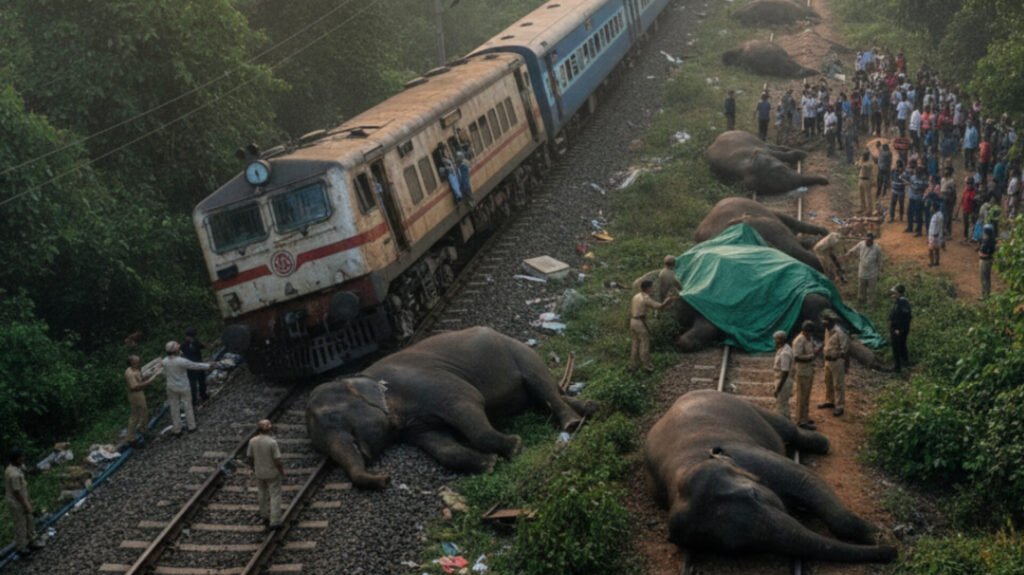
In a tragic incident highlighting the growing conflict between wildlife and infrastructure, eight elephants were killed after being struck by the Sairang–New Delhi Rajdhani Express in Assam’s Hojai district. The accident has sparked concern over railway safety measures in elephant corridors.
How the incident occurred?
The collision took place late at night near a forest-adjacent railway stretch in Hojai district, an area known for frequent elephant movement.
According to officials, a herd of elephants was crossing the tracks when the high-speed Rajdhani Express approached.
Despite emergency braking attempts by the locomotive pilot, the train could not be stopped in time, resulting in the deaths of eight elephants, including juveniles. Forest and railway officials reached the site soon after receiving alerts from local residents and train staff.
Authorities confirmed that the track passes through a recognised elephant corridor, where such encounters have been reported in the past.
Train services on the route were temporarily disrupted while rescue and clearance operations were carried out. The incident has renewed scrutiny of existing safety protocols along vulnerable railway sections in Assam.
Official response and Key details
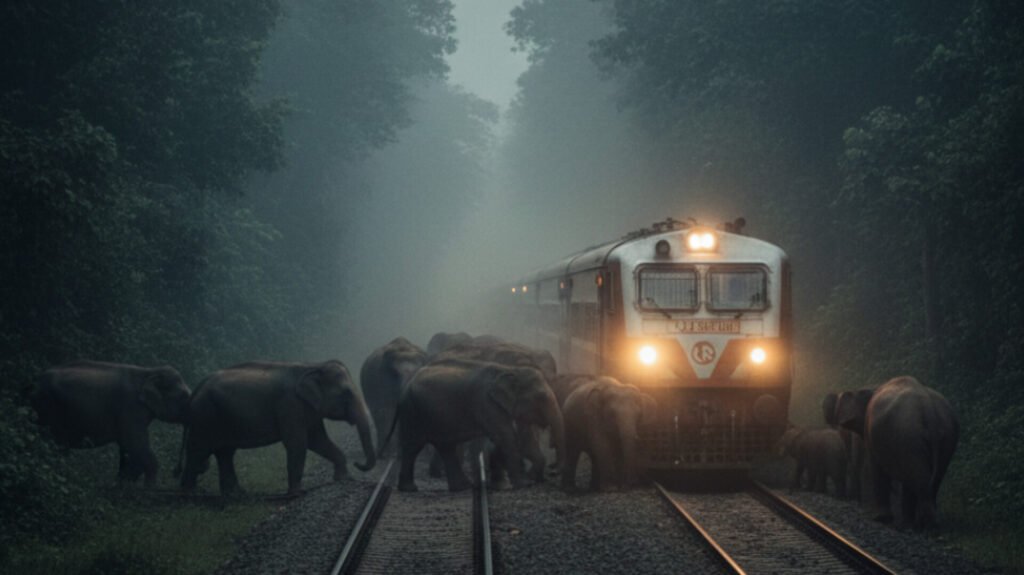
- Forest department teams conducted post-mortem examinations and secured the area to prevent further incidents.
- Railway officials stated that speed restrictions are already in place but may need stricter enforcement.
- Environmentalists and wildlife activists demanded improved warning systems and alternative mitigation measures.
- An inquiry has been ordered to assess whether standard operating procedures were followed.
The deaths of eight elephants underscore the urgent need for stronger coordination between railway authorities and wildlife departments.
Better surveillance, real-time alerts, and long-term infrastructure planning are essential to prevent such tragedies and protect both wildlife and human interests.