
Delhi government proposes major shift towards electric mobility
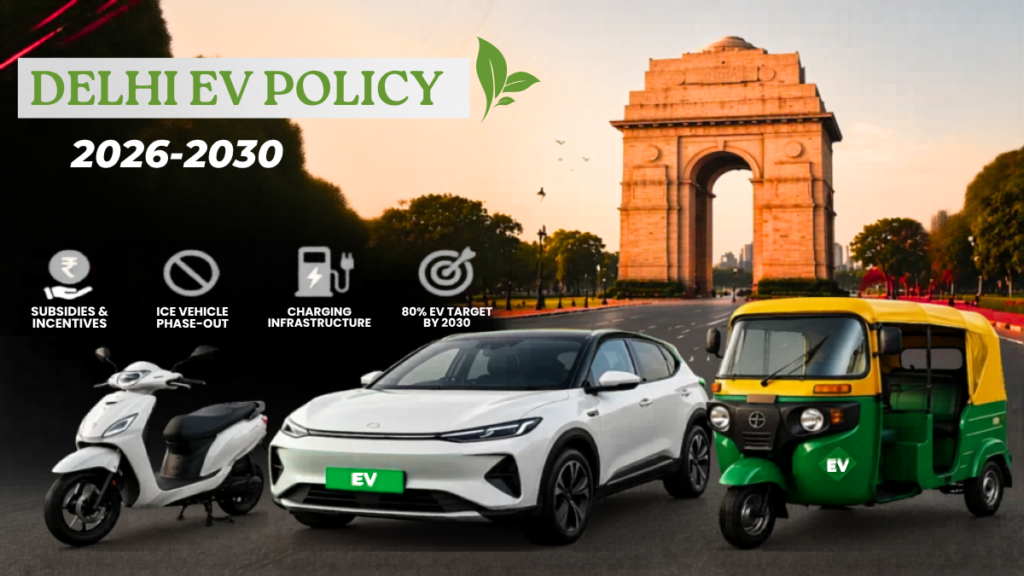
The Delhi EV Policy 2026 aims to accelerate the adoption of electric vehicles in the national capital with a series of strong measures, incentives, and long-term goals. The draft policy outlines a roadmap to reduce pollution and promote sustainable transport across the city.
What Is Delhi EV Policy 2026?
The Delhi EV Policy 2026–2030 is a draft framework introduced by the Delhi government to expand electric vehicle adoption and improve air quality. The policy focuses on creating a strong EV ecosystem while offering financial incentives to buyers.
It will come into effect after official notification and will remain applicable for several years, guiding the city’s transition toward clean mobility.
Electric Vehicles Mandatory in Phases
One of the biggest highlights of the Delhi EV Policy 2026 is the phased transition to electric vehicles:
- From January 1, 2027: Only electric three-wheelers will be newly registered
- From April 1, 2028: Only electric two-wheelers will be allowed for new registrations
This move is expected to significantly reduce pollution levels in Delhi.
Subsidies and Incentives Under Delhi EV Policy 2026
The policy offers several financial benefits to encourage EV adoption:
Electric Cars
- 100% exemption on road tax and registration fees for EVs up to ₹30 lakh
- No exemption for cars above ₹30 lakh
- Scrapping incentive of up to ₹1 lakh for replacing old vehicles
Electric Two-Wheelers
- ₹10,000 per kWh (up to ₹30,000) in first year
- ₹6,600 per kWh (up to ₹20,000) in second year
- ₹3,300 per kWh (up to ₹10,000) in third year
Electric Auto Rickshaws
- ₹50,000 incentive (Year 1)
- ₹40,000 (Year 2)
- ₹30,000 (Year 3)
Electric Goods Vehicles
- Up to ₹1 lakh incentive in first year
- Reduced incentives in subsequent years
All incentives will be provided via direct benefit transfer (DBT) to eligible Delhi residents.
Focus on Public and Commercial Transport
The Delhi EV Policy 2026 also emphasizes electrification of public transport:
- School buses to gradually shift to electric
- Government vehicles to become fully electric
- New intra-state buses to adopt electric or cleaner alternatives
These steps aim to reduce emissions from large-scale transport systems.
Support for Scrapping Old Vehicles
To accelerate adoption, the Delhi EV Policy 2026 introduces a scrapping incentive:
- Up to ₹1 lakh for scrapping BS-IV or older vehicles
- Benefit applicable if a new EV is purchased within 6 months
This initiative encourages people to replace old polluting vehicles with cleaner alternatives.
Hybrid Vehicles Also Included
The draft policy also proposes a 50% tax exemption for strong hybrid vehicles, offering a transitional option for buyers not ready to switch fully to EVs.
Public Feedback Invited
The government has opened the draft policy for public feedback:
- Suggestions can be submitted within 30 days
- Citizens can send feedback via email or official channels
This ensures that the final policy reflects public needs and concerns.
Objective Behind Delhi EV Policy 2026
The primary goals of the Delhi EV Policy 2026 include:
- Reducing air pollution
- Promoting sustainable transport
- Building EV infrastructure
- Encouraging citizens to shift from fuel-based vehicles
The policy builds on the earlier EV policy introduced in 2020 and aims to strengthen Delhi’s position as a leader in electric mobility.
Current Status
The Delhi EV Policy 2026 is currently in draft stage, and final implementation will begin after approval and notification.
At present, the policy has generated significant discussion among citizens and industry experts, as it could transform the future of transportation in Delhi.