
When India’s heavy-lift rocket LVM3 lifted off from Sriharikota last week, the mission itself was not unfamiliar.
ISRO has launched satellites before, and it has done so reliably for years. What made the BlueBird-2 mission different, however, was not the launch but the direction it pointed India’s space programme towards.
Executed on December 24, the mission placed the BlueBird-2 satellite into low Earth orbit for US-based company AST SpaceMobile. While the technical success was expected, the commercial context of the launch deserves closer attention.
Why This Launch Was Not “Routine”?
BlueBird-2 was among the heaviest commercial satellites India has deployed into low Earth orbit, weighing a little over six tonnes. For the LVM3 rocket, this was a test of credibility rather than capability proof that it can consistently handle missions meant for paying international clients, not just national objectives.
More importantly, the launch was facilitated through NewSpace India Limited (NSIL), the government-owned company tasked with commercialising ISRO’s launch services.
This structure reflects a deliberate separation between mission execution and market participation, a model India has been steadily building over the past few years.
What the Satellite Brings to the Table?
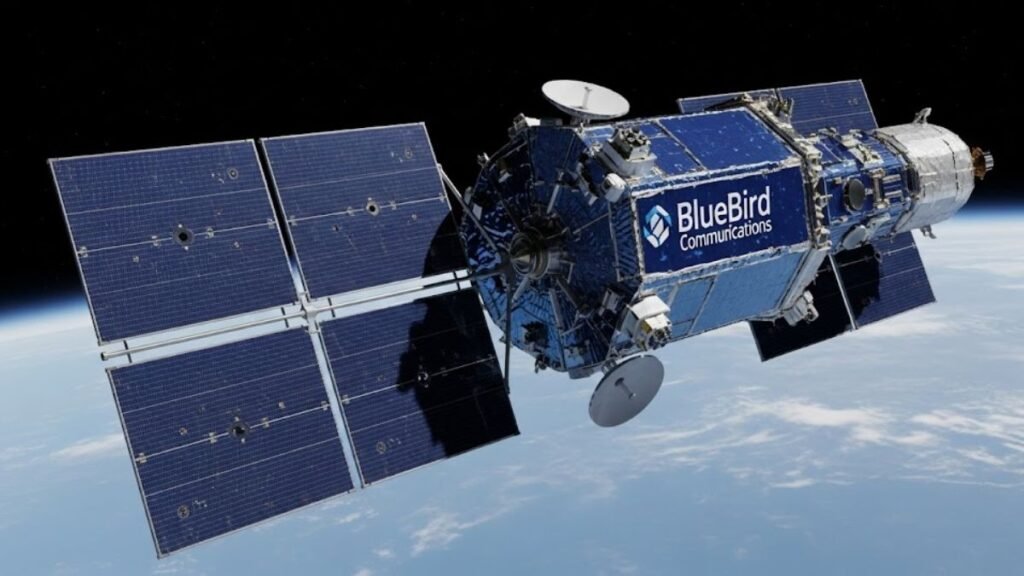
Unlike conventional communication satellites, BlueBird-2 has been designed to interact directly with everyday mobile phones. The satellite carries an unusually large antenna structure, enabling it to bridge gaps where terrestrial networks struggle—particularly in remote or low-connectivity regions.
While such ambitions are still being tested globally, the technology places the mission firmly within the race to expand space-based cellular connectivity, an area drawing increasing investment from private players.
India’s Commercial Calculus
India’s entry into the commercial launch market is not driven by speed or scale. Instead, it is built around predictability and cost control traits that appeal to companies looking for dependable access to orbit without premium pricing.
At a time when private launch providers are competing aggressively on frequency, ISRO’s methodical approach offers a contrast. For satellite operators deploying expensive infrastructure, reliability remains a stronger currency than rapid turnaround.
The Larger Picture
BlueBird-2 should be viewed as part of a longer strategy rather than a single achievement. The mission strengthens India’s case as a viable commercial launch partner while reinforcing confidence in the LVM3 platform.
As demand for low Earth orbit deployments grows—driven by communication constellations and emerging broadband services—India’s ability to combine engineering discipline with commercial accessibility could determine how large a role it plays in the next phase of the space economy.
Unwires Insight
The significance of BlueBird-2 lies less in the payload it carried and more in the market signal it sent. India is not attempting to dominate the commercial space sector overnight. Instead, it is positioning itself as a steady, dependable alternative in an increasingly crowded launch environment.
Whether this approach translates into sustained commercial momentum will depend on NSIL’s ability to convert one-off missions into long-term partnerships. If that transition succeeds, BlueBird-2 may be remembered not as a headline launch, but as the moment India’s space programme quietly crossed into a new economic role.