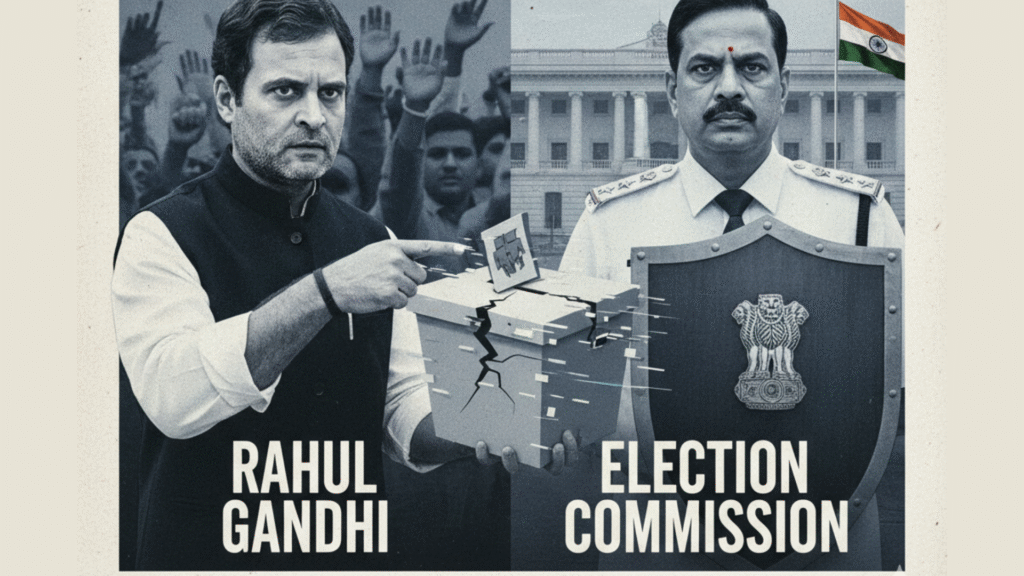
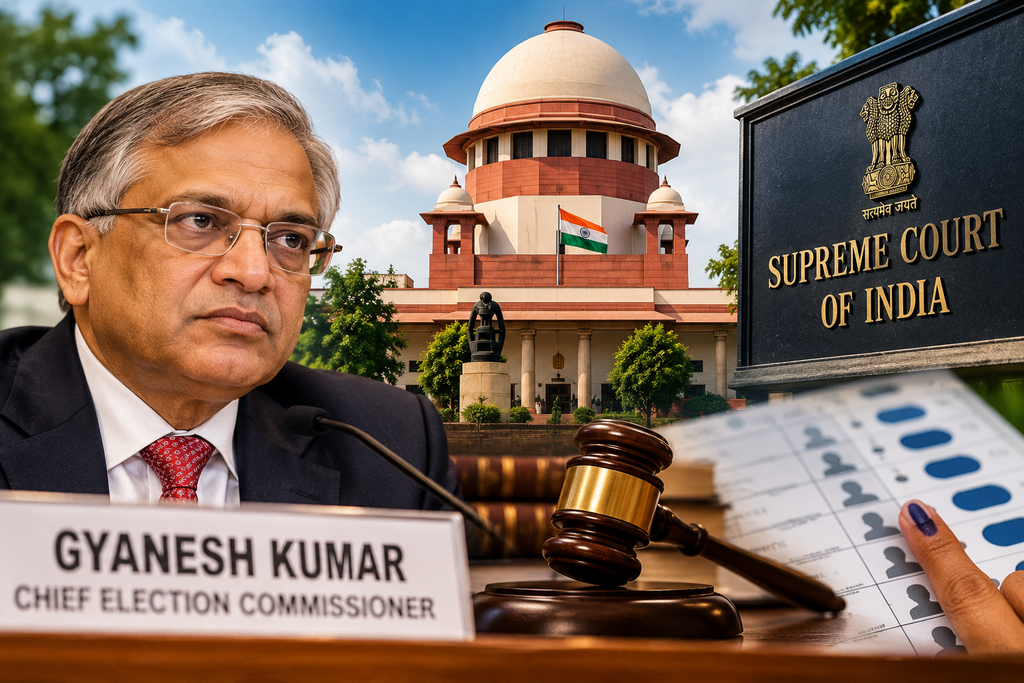
The Gyanesh Kumar Supreme Court Hearing matter has attracted attention after the Supreme Court considered a plea seeking interim action against Chief Election Commissioner Gyanesh Kumar and questioning certain decisions of the Election Commission of India.
Instead of passing an ex-parte order to suspend the CEC, the court issued notices to the concerned respondents. The development has brought renewed attention to the functioning of the Election Commission and the legal questions raised before the court.
What Happened in the Supreme Court?
The petition before the Supreme Court sought interim relief against Chief Election Commissioner Gyanesh Kumar while also challenging certain decisions associated with the Election Commission.
The court did not accept the request for an immediate ex-parte suspension. Instead, notices were issued to the concerned parties, allowing them an opportunity to respond to the allegations and arguments presented in the petition.
This means that the matter remains under judicial consideration and no final conclusion has been reached on the issues raised by the petitioner.
Why Is Gyanesh Kumar at the Centre of the Case?
Gyanesh Kumar is the Chief Election Commissioner of India, making any legal challenge concerning decisions taken under the Election Commission’s authority an issue of wider public interest.
Gyanesh Kumar Supreme Court Hearing
The petition reportedly raises questions about the manner in which certain decisions were taken within the Election Commission, including issues connected with the Special Intensive Revision, commonly referred to as SIR.
The court’s decision to seek responses from the concerned parties means that the arguments will now be examined through the judicial process.

What Is the SIR Issue?
Special Intensive Revision, or SIR, refers to an exercise involving the revision and verification of electoral rolls.
Electoral-roll revision can become particularly significant because voter lists form an essential part of the election process. Questions regarding how such revisions are conducted can therefore attract legal and public attention.
In the present case, arguments concerning the Election Commission’s decisions have become part of the broader legal proceedings before the Supreme Court.
Why Did the Supreme Court Issue Notices?
A notice from the Supreme Court gives the concerned respondents an opportunity to present their position before the court.
The court’s refusal to grant the requested ex-parte interim relief at this stage does not itself determine whether the allegations made in the petition are correct or incorrect.
The next stages of the case will depend on the responses filed by the respondents and the arguments presented during subsequent hearings.
What Happens Next in the Case?
The legal process will continue after the respondents receive the court’s notice.
Gyanesh Kumar Supreme Court Hearing may examine the submissions from all sides before deciding how the matter should proceed. Depending on the arguments and documents placed before the bench, the court could consider further directions or other forms of relief sought by the petitioner.
For now, the key development is that the court has not ordered an immediate suspension of CEC Gyanesh Kumar ex parte and has instead sought responses from the concerned parties.
Also visit us: Jeffrey Archer: Life, Famous Books And The Legacy Of A Master Storyteller
Why This Case Matters
The case is significant because the Election Commission plays a central role in India’s electoral system. Challenges involving its decisions can raise questions about procedure, authority and the interpretation of election-related rules.
At the same time, court proceedings should be distinguished from final findings. The allegations and legal arguments made in a petition do not automatically establish that any wrongdoing has occurred.
The Supreme Court’s further consideration of the matter will therefore be important for understanding how the legal questions raised in the petition are addressed.
Final Takeaway
The latest Gyanesh Kumar Supreme Court Hearing development is centred on the court’s decision not to grant an immediate ex-parte suspension of the Chief Election Commissioner while issuing notices on the plea challenging certain ECI decisions.
The case remains part of an ongoing judicial process. Further hearings and responses from the concerned parties will provide more clarity on the issues raised before the Supreme Court.