
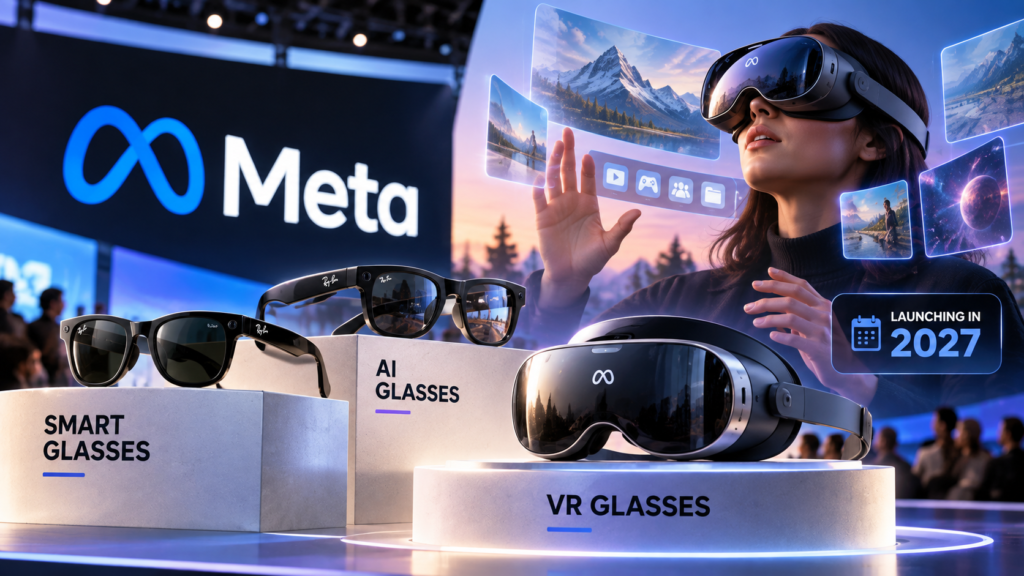
Meta has introduced a fresh lineup of wearable devices, bringing together smart audio glasses, upgraded camera-equipped eyewear and a new generation of virtual reality hardware.
Meta’s New Wearables introduce smart glasses, virtual reality technology, immersive displays, AI features and new privacy-focused improvements.
A New Approach to Smart Glasses
One of the more interesting additions is a new version of Ray-Ban Meta glasses that removes the camera completely.
Instead, the audio-focused glasses use built-in speakers and microphones. Users can listen to music, make calls and interact with Meta’s AI assistant without having a camera built into the frame.
The glasses are expected to offer up to 12 hours of battery life and will be available in familiar Ray-Ban styles, including Clubmaster and Burbank designs.
The reported starting price is £319, with regional pricing listed at €349 and A$529.

Camera-Equipped Ray-Ban Meta Gets an Upgrade
Meta has also introduced the Ray-Ban Meta Gen 3, which continues to use cameras while adding improvements to battery life and audio.
The new version is reported to provide up to nine hours of use and support Dolby Atmos audio. It will also include an LED indicator designed to make recording more visible to people nearby.
Meta has also added improved tampering detection, aiming to make the recording indicator harder to interfere with.
The reported price is £409, with regional pricing of €449 and A$679.
Meta Expands Its Display Glasses
Meta is also widening the availability of its Ray-Ban Meta Display glasses.
The eyewear features a virtual display and is expanding beyond the US. The UK and Canada will receive it first, followed by France, Germany and Italy, alongside Meta VR Glasses.
The reported UK price is £749, while the Canadian price is CA$1,149. European pricing is listed at €899 for the later rollout.
Where the New VR Glasses Come In
Alongside its smart-glasses lineup, Meta has revealed a new generation of virtual reality glasses designed to be considerably lighter than previous hardware.
The new device weighs approximately 100 grams and uses a magnesium-alloy construction. It features a 5K microOLED display with a claimed 37 pixels per degree, putting its display quality in the same conversation as high-end immersive headsets.
A front-facing camera system helps with augmented-reality features and allows users to remain aware of their surroundings while using virtual content.
A Separate Computing Unit Reduces Head Weight
Rather than placing all of the processing hardware directly around the user’s head, Meta’s new VR system uses a separate pocket-sized computing unit connected through a cable.
The computing unit weighs around 300 grams and houses the processing hardware and battery.
According to the information released with the announcement, its battery can last for up to three hours.
This design allows the headset itself to remain lighter while shifting some of the hardware away from the user’s head.
Built for Work and Entertainment
Meta appears to be positioning the new VR system for more than traditional gaming.
The glasses will work with the existing Quest software library and support productivity features such as multiple virtual windows. They can also connect with a Mac or PC to mirror displays.
That could make the device useful for people who want a large virtual workspace without relying on a conventional physical monitor.
Gaming remains part of the ecosystem as well, with support for Quest hand controllers and Xbox gamepads.
Eye Tracking and Hand Controls
The new hardware also introduces more natural ways of interacting with virtual content.
Eye tracking allows the system to understand where the user is looking, while hand-gesture controls provide another way to navigate digital environments.
One highlighted feature allows users to project a virtual keyboard onto a surface, creating a more flexible approach to typing and interacting with virtual screens.
Immersive 3D Entertainment
Entertainment is another major part of Meta’s vision for the new hardware.
The company describes the glasses as IMAX Enhanced, with support for immersive 3D experiences. At launch, a Disney+ immersive environment is expected to give viewers virtual spaces inspired by entertainment properties.
The idea is to make watching content feel less like viewing a normal screen and more like entering a digital environment.
When Will the New VR Hardware Arrive?
The new virtual reality glasses are expected to arrive in spring 2027.
The announced launch is planned across North America, Europe and Asia, with a reported starting price of $1,299.99.
This puts the device firmly in the premium wearable category, while its lighter construction, high-resolution display and separate computing unit show how Meta is approaching the next stage of VR hardware.
Privacy Is Becoming an Important Part of Wearable Design
One of the clearest themes across Meta’s latest announcements is privacy.
Camera-equipped smart glasses can raise questions about recording people in public spaces. Meta’s audio-only glasses take a different approach by removing the camera altogether.
For its camera-equipped models, Meta is continuing to use visible recording indicators and tampering detection.
This shows how privacy considerations are becoming increasingly connected to the design of wearable technology rather than being treated as a separate software issue.
What Meta’s Latest Announcement Shows
Meta’s latest wearable lineup covers several different use cases instead of relying on one type of device.
The audio-only glasses focus on calls, music and AI interaction. The upgraded camera glasses add imaging and enhanced audio features, while the display glasses bring digital information closer to the user’s field of view.
The new VR hardware takes the concept further with a high-resolution display, spatial interaction, virtual workspaces and immersive entertainment.
With the VR device scheduled for 2027, its eventual reception will depend on factors such as comfort, battery life, software support and how useful people find its virtual features in everyday situations.
Meta’s latest announcement therefore points toward a broader wearable ecosystem where smart glasses, AI, augmented reality and virtual reality increasingly overlap.
Also visit us: NSE Share Price Today: What the Market Is Watching After NSE’s Historic Listing