
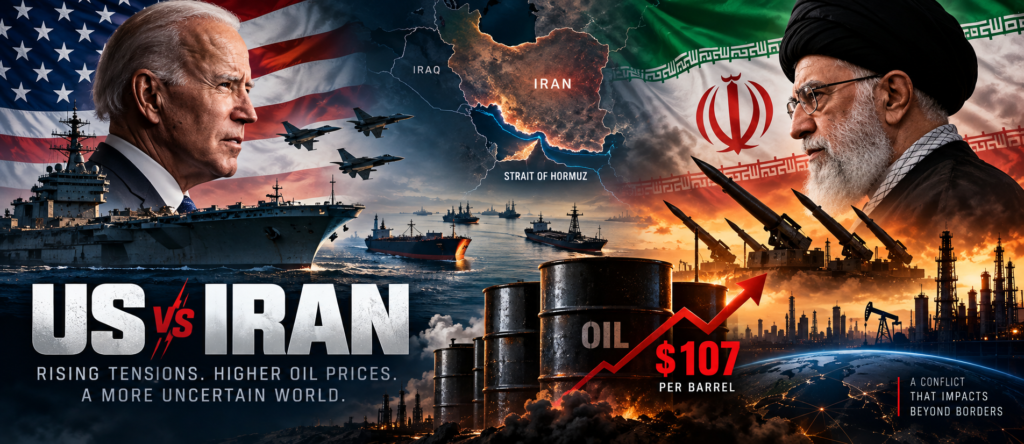
The US Iran War has become a major international news story as tensions between the United States and Iran continue to affect the Middle East and global markets. The conflict has raised concerns about regional security, energy supplies, oil prices, and the possibility of further escalation.
The latest developments are being closely watched by governments, financial markets, and businesses because prolonged instability in the region could have consequences well beyond the Middle East.
What is happening in the US Iran War?
The current conflict has increased uncertainty across the region, with military developments and diplomatic efforts attracting international attention.
The situation has also created concerns about important energy routes in the Middle East. Any disruption to oil transportation could have a direct impact on global crude prices because the region plays a major role in international energy supplies.
As a result, the US Iran War is being monitored not only as a geopolitical crisis but also as an important economic issue.

Oil Prices Become a Major Concern
One of the biggest effects of the conflict has been increased pressure on crude oil markets.
Brent crude has recently traded around the $107 per barrel level as investors assess potential supply disruptions and developments involving key energy infrastructure and shipping routes.
Higher oil prices can create challenges for countries that depend heavily on imported crude. Rising energy costs can increase transportation and production expenses and may also contribute to inflationary pressure.
Strait of Hormuz Remains in Focus
The Strait of Hormuz is one of the world’s most important energy shipping routes, making developments around the waterway particularly significant.
Any prolonged disruption to shipping through the region could create uncertainty for global oil and gas supplies. This is why governments and financial markets are paying close attention to developments connected to the waterway.
The situation has also increased concerns among energy-importing countries about the possibility of higher fuel and transportation costs.
Global Markets React to Rising Tensions
Geopolitical uncertainty often affects financial markets, and the current conflict is no exception.
Investors are watching movements in crude oil, global equity markets, currencies, and government bond yields as they assess the potential economic consequences of the conflict.
Higher oil prices combined with uncertainty about global growth can make investors more cautious, particularly in markets that are sensitive to energy costs and international capital flows.
Why the Conflict Matters for India
India is also closely watching the situation because changes in global crude oil prices can affect the country’s economy.
India imports a large amount of its crude oil requirements, meaning a prolonged rise in international oil prices could increase the country’s import bill. Higher energy costs can also influence transportation, manufacturing, logistics, and other sectors.
For Indian investors, the US Iran War therefore has relevance beyond foreign policy because global oil prices and market sentiment can influence Indian equities and the rupee.
Major Areas Being Watched
The international community is closely monitoring several developments as the situation continues:
- Military developments between the involved countries
- Oil and gas supply conditions
- Shipping activity around the Strait of Hormuz
- Regional security developments
- Global crude oil prices
- Diplomatic negotiations
- International financial-market reactions
- Possible impact on inflation and economic growth
These factors could determine how the crisis develops in the coming days and weeks.
Diplomatic Efforts Could Become Important
While military developments remain a major focus, diplomatic efforts could play an important role in preventing further escalation.
International governments and diplomatic organisations are expected to monitor the situation closely and explore possible channels for reducing tensions.
Any meaningful progress toward negotiations or de-escalation could improve market sentiment. On the other hand, further military escalation could increase concerns about energy supplies and regional stability.
Three Key Economic Risks From the Conflict
1. Higher Crude Oil Prices
A prolonged conflict could keep oil prices elevated if investors remain concerned about supply disruptions.
2. Inflationary Pressure
Higher energy and transportation costs can put additional pressure on consumer prices in several economies.
3. Market Volatility
Uncertainty surrounding the conflict can lead investors to become more cautious, potentially increasing volatility across global financial markets.
What Happens Next?
The future direction of the US Iran War will depend on military developments, diplomatic initiatives, regional responses, and the stability of major energy routes.
Markets will continue watching crude oil prices and global economic indicators for signs of whether the situation is becoming more stable or moving toward further escalation.
For India and other energy-importing economies, the key concern will remain the impact of prolonged high oil prices on inflation, currency movements, trade, and economic growth.
Conclusion
The US Iran War has developed into a major geopolitical issue with potential consequences for global energy markets and the wider economy. Rising crude oil prices, concerns around the Strait of Hormuz, and increased market uncertainty have made the conflict an important topic for governments, investors, and businesses.
The coming weeks could be particularly important as the world watches for diplomatic progress, changes in energy markets, and signs of either escalation or de-escalation.
Also visit us: Nifty 50 Market Outlook: Key Factors Driving The Index And What Investors Should Watch