
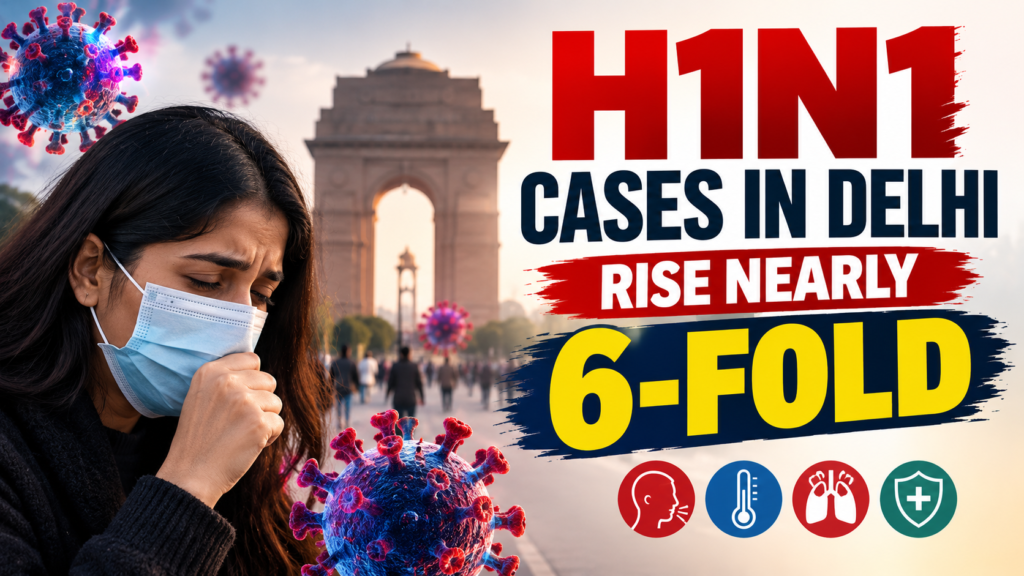
H1N1 cases in Delhi have increased sharply, with reports indicating a nearly six-fold rise compared with the previous year. The surge has brought renewed attention to seasonal influenza, its warning signs, high-risk groups and the precautions residents can take to reduce the chances of infection.
The rise comes as health experts stress the importance of recognising influenza symptoms early, particularly among people more vulnerable to complications.
H1N1 Cases in Delhi See Nearly Six-Fold Increase
- Reports citing available health data indicate that H1N1 cases in Delhi have risen nearly six-fold compared with the corresponding period last year.
- The increase has placed seasonal influenza under renewed public-health attention.
- H1N1 is a strain of influenza A virus that can cause respiratory illness.
- Most infections may cause flu-like symptoms, but some patients can develop serious complications.
- The severity of illness can depend on age, existing health conditions and immune status.
The sharp increase does not mean every infected person will develop severe disease, but health authorities and medical experts continue to emphasise early attention to warning signs.

What Are the Symptoms of H1N1?
The symptoms can initially resemble those of ordinary seasonal flu, which can make early identification difficult.
Common symptoms include:
- Fever or feeling feverish
- Cough
- Sore throat
- Runny or blocked nose
- Headache
- Body aches
- Chills
- Fatigue and weakness
Some patients may also experience vomiting or diarrhoea, particularly children.
Which Warning Signs Need Immediate Attention?
Not every case requires hospitalisation. However, certain symptoms can indicate that medical evaluation is needed.
- Difficulty breathing or shortness of breath
- Persistent or worsening fever
- Chest pain
- Severe weakness or dizziness
- Confusion or unusual drowsiness
- Symptoms that improve and then suddenly become worse
For children, unusual sleepiness, difficulty breathing, dehydration or refusal to drink can be important warning signs.
Also Read :- Dabur Products Barred from Using ‘100%’ Claims: Here’s the Full List and What the Court Order Means
Who Faces a Higher Risk of Complications?
The H1N1 cases in Delhi have renewed concern particularly for groups more vulnerable to severe influenza.
Higher-risk groups can include:
- Older adults
- Young children
- Pregnant women
- People with asthma or other chronic respiratory conditions
- People with diabetes
- Individuals with heart disease
- People with weakened immune systems
These groups may require greater caution when influenza activity increases.
How Can Delhi Residents Reduce Infection Risk?
Preventive measures remain important during an influenza surge.
- Wash hands regularly with soap and water.
- Avoid close contact with people showing flu symptoms.
- Cover the mouth and nose while coughing or sneezing.
- Avoid touching the eyes, nose and mouth with unwashed hands.
- Stay home when experiencing significant flu-like symptoms.
- Improve ventilation in crowded indoor spaces.
- Follow medical advice regarding influenza vaccination, particularly if you belong to a high-risk group.
People experiencing symptoms should avoid self-medicating with antibiotics because influenza is caused by a virus, while antibiotics are used against bacterial infections.
Why Is the H1N1 Rise Important?
The nearly six-fold increase reported in Delhi highlights the continuing circulation of influenza and the need for greater awareness of respiratory symptoms.
The key concern is not simply the number of reported H1N1 cases in Delhi, but whether infections lead to complications among vulnerable patients. Recognising symptoms early, seeking appropriate medical advice and following basic infection-control measures can help reduce the risk of serious outcomes.