
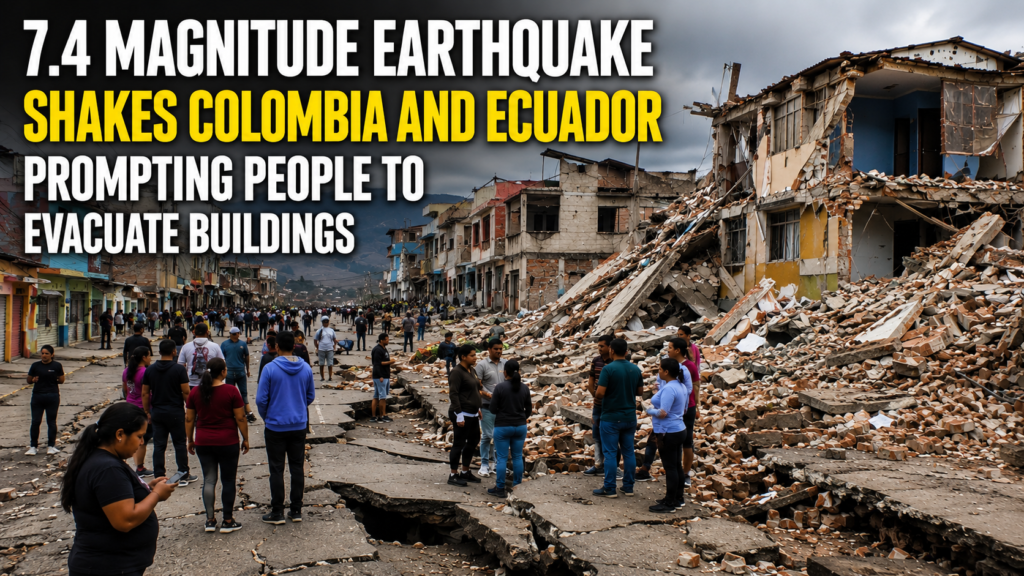
A Colombia earthquake of magnitude 7.4 struck western Colombia on August 10, 2026, triggering strong tremors that were also felt across parts of Ecuador. The powerful earthquake prompted people to evacuate buildings as authorities assessed damage and casualties.
- The earthquake was reported at magnitude 7.4.
- Western Colombia was among the areas most affected by the strong shaking.
- Tremors were also felt in Ecuador, prompting concern among residents.
- People rushed out of buildings following the earthquake as precautionary evacuations began.
- Initial reports indicated deaths and injuries, but casualty figures were changing as rescue and assessment operations continued.
- Reports from different outlets gave different early death tolls, making the final confirmed figure subject to official updates.
Colombia Earthquake Triggers Panic Across Western Region
The Colombia earthquake created panic in affected communities after buildings began shaking strongly. Residents reportedly moved outside buildings to avoid potential risks from structural damage and falling objects.
The intensity of the tremors raised immediate concerns about damage to homes, public buildings and infrastructure. Emergency authorities began assessing affected areas while information about casualties continued to emerge.

7.4 Magnitude Earthquake Felt in Ecuador
The impact of the 7.4 magnitude earthquake was not limited to Colombia. Strong tremors were also reported in Ecuador, where people evacuated buildings after feeling the earthquake.
Earthquakes of this strength can be felt over a wide geographical area, particularly when the epicentre is relatively shallow. Authorities in affected areas typically assess buildings, roads, bridges and other critical infrastructure after such an event.
Death Toll and Injuries Under Assessment
One of the most significant developments following the Colombia earthquake was the emergence of reports of fatalities and injuries.
- Early reports cited a death toll of around 20 people.
- A later report put the number of deaths at more than 100, indicating that the situation was still developing.
- Dozens of people were also reported injured.
- Rescue teams continued working in affected areas.
- The final casualty figure could change as authorities reached more locations and verified reports.
Because the available reports carried different figures, the official confirmed death toll should be treated as the authoritative figure rather than relying on an early estimate.
Why Did People Evacuate Buildings?
The immediate evacuation was primarily a safety response to the powerful shaking.
- Strong tremors can weaken already vulnerable structures.
- Falling objects and debris can create additional hazards.
- Aftershocks may follow a major earthquake.
- Emergency officials generally advise people to remain cautious around damaged buildings.
Residents who evacuated were responding to the immediate risk created by the earthquake and possible structural damage.
Also Read :- Meta Apologises to India After Temporarily Restricting PM Modi’s Social Media Post
Rescue Operations and Damage Assessment
Emergency teams faced the difficult task of identifying affected locations, treating injured people and determining the extent of structural damage.
Authorities were expected to focus on:
- Searching potentially damaged buildings.
- Providing medical assistance to injured residents.
- Checking roads and infrastructure.
- Assessing buildings for structural safety.
- Monitoring the possibility of aftershocks.
- Updating the public about evacuation and safety measures.
The scale of the disaster could become clearer as emergency agencies completed their assessments.
What Happens After a Major Earthquake?
After a major earthquake, authorities normally inspect infrastructure and continue monitoring seismic activity. Residents in affected areas are advised to follow official instructions and avoid entering visibly damaged structures.
The Colombia earthquake has therefore become a major emergency situation involving rescue operations, casualty verification and infrastructure assessment across the affected region.
Key Points
- Magnitude: 7.4
- Primary affected country: Colombia
- Other affected area: Ecuador
- Region: Western Colombia
- Impact: Strong tremors and building evacuations
- Casualties: Reports varied significantly as rescue operations continued
- Response: Rescue, medical assistance and damage assessment operations underway
The situation remains subject to official updates as authorities continue confirming casualties and assessing the full impact of the earthquake.