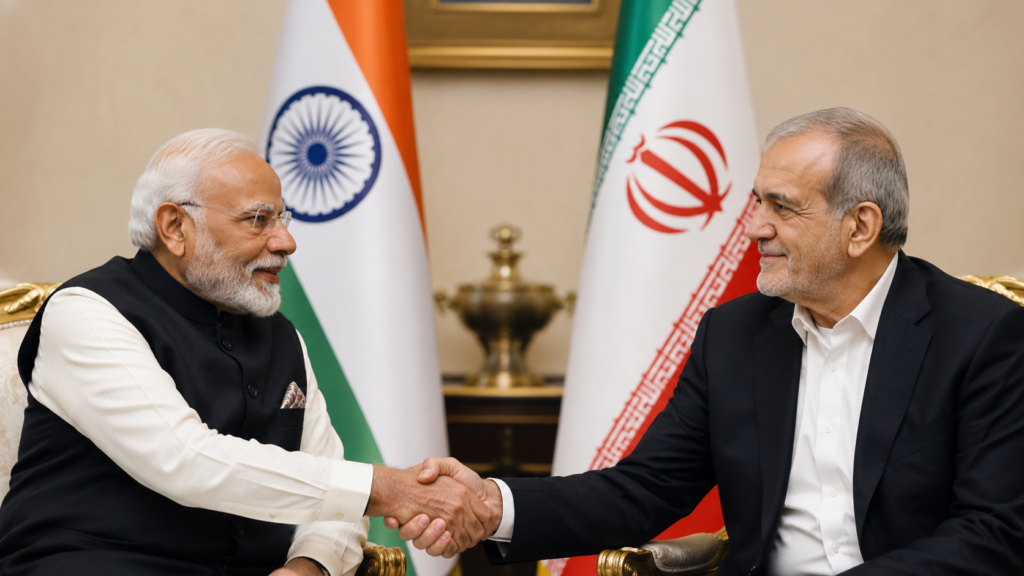
Prime Minister Narendra Modi held a telephonic conversation with Iranian President Masoud Pezeshkian, during which both leaders discussed the evolving situation in West Asia and the importance of maintaining regional peace and stability. The PM Modi Iran President Meeting comes at a time when geopolitical tensions in the region continue to draw global attention.
During the conversation, Prime Minister Modi reiterated India’s commitment to peaceful dialogue, diplomacy, and regional security while expressing concern over the ongoing instability in West Asia.
PM Modi and Iran President Discuss Regional Developments
According to official statements, the leaders exchanged views on the current developments in West Asia and emphasized the need for de-escalation. Prime Minister Modi highlighted that India supports peaceful resolution of conflicts through dialogue and diplomatic engagement.
President Masoud Pezeshkian briefed Prime Minister Modi on the regional situation and appreciated India’s balanced approach towards promoting peace and stability.
India Calls for Lasting Peace in West Asia
During the PM Modi Iran President Meeting, India stressed that sustainable peace and regional stability are essential for economic growth, energy security, and humanitarian well-being.
India has consistently maintained that disputes should be resolved through diplomacy rather than military confrontation. The government reaffirmed its support for international efforts aimed at reducing tensions in the region.

Importance of India-Iran Relations
India and Iran share longstanding diplomatic, economic, and cultural ties. The relationship has remained important in areas such as:
- Energy cooperation
- Trade and commerce
- Regional connectivity
- Maritime security
- Cultural exchanges
The latest conversation between the two leaders reflects continued engagement despite changing geopolitical circumstances.
Why West Asia Matters for India
West Asia remains strategically significant for India due to several reasons:
- A large Indian diaspora lives and works across the region.
- India imports a significant share of its crude oil and energy resources from West Asian countries.
- Regional stability directly impacts global energy prices and trade routes.
- Peace in West Asia supports India’s economic and strategic interests.
Because of these factors, India continues to closely monitor developments and actively supports diplomatic solutions.
India’s Foreign Policy Focus
India has consistently followed a balanced foreign policy by maintaining constructive relations with countries across West Asia. Through diplomatic engagement, India seeks to promote:
- Regional peace
- Stability
- Dialogue between nations
- Protection of civilians
- International cooperation
The government has reiterated that peaceful negotiations remain the most effective way to address regional conflicts.
Also Read: Delhi Coaching Centres New Law: Government Gives 1 Month to Coaching Institutes to Meet Safety Norms
Official Statements
Following the conversation, Prime Minister Narendra Modi shared on social media that he had spoken with President Masoud Pezeshkian regarding the developments in West Asia. He emphasized India’s support for peace, stability, and an early restoration of normalcy through dialogue and diplomacy.
The discussion reflects India’s continued commitment to playing a constructive role in promoting peace while maintaining strong diplomatic ties with countries across the region.
Conclusion
The PM Modi Iran President Meeting highlights India’s consistent approach of advocating peace, stability, and diplomatic engagement in West Asia. As regional tensions continue to evolve, India’s balanced foreign policy and close communication with key global partners remain important for safeguarding regional security, economic interests, and international cooperation.