
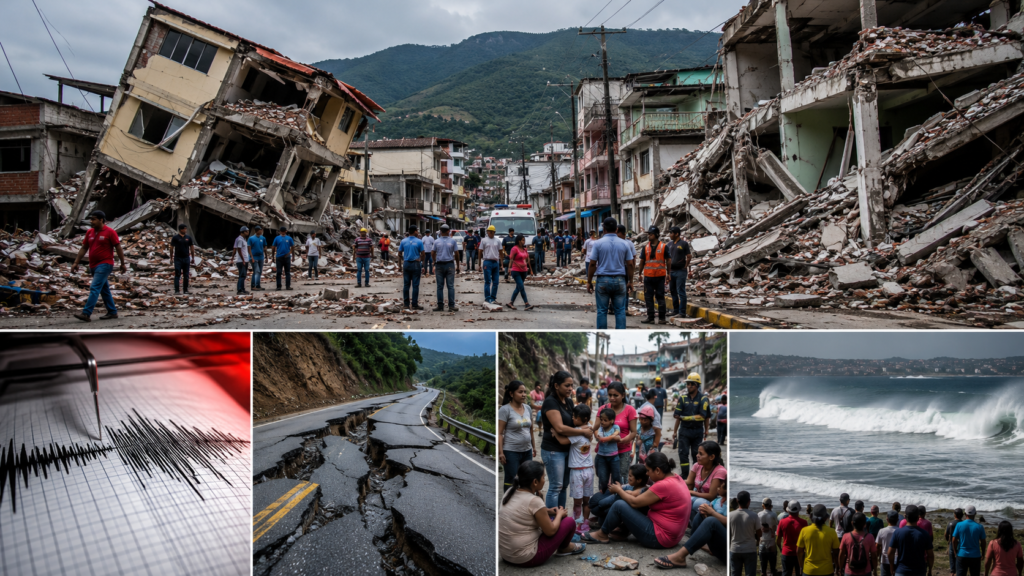
Venezuela Earthquake has become one of the most significant seismic events reported in South America after two powerful earthquakes struck the country within a short span, prompting emergency response measures and widespread safety inspections. The strong tremors were felt across several regions of Venezuela and neighboring countries, leading authorities to temporarily suspend airport operations, assess infrastructure, and monitor coastal areas for possible tsunami impacts.
According to official updates from the United States Geological Survey (USGS) and emergency authorities, the earthquakes caused strong ground shaking across western and northern Venezuela, with residents evacuating buildings as precautionary measures were implemented.
Also Read :- Oracle AI Job Cuts: Around 21,000 Employees Affected as Company Expands Artificial Intelligence Strategy
Venezuela Earthquake: Magnitude and Epicenter
The Venezuela Earthquake involved two powerful seismic events recorded by monitoring agencies.
Key details include:
- A major earthquake measuring 7.5 magnitude was recorded by the USGS.
- A second strong earthquake followed shortly afterward.
- The epicenter was reported near the Morón region of Venezuela.
- Tremors were felt across multiple Venezuelan states.
- Shaking was also reported in neighboring Caribbean regions.
Seismologists continued monitoring aftershocks following the initial earthquakes.

Emergency Declared After Powerful Tremors
Authorities quickly activated emergency response measures following the earthquakes.
Official actions included:
- Emergency response teams deployed to affected areas.
- Structural inspections of public buildings and infrastructure.
- Search and assessment teams sent to vulnerable locations.
- Local authorities advised residents to remain cautious.
- Government agencies coordinated damage assessments.
Officials urged the public to follow emergency advisories while inspections continued.
Airport Operations Temporarily Suspended
One of the immediate impacts of the Venezuela Earthquake was the temporary suspension of operations at Caracas Airport.
According to official reports:
- Airport operations were halted as a precaution.
- Runways and terminal facilities underwent safety inspections.
- Aviation authorities assessed structural integrity before resuming services.
- Passengers experienced temporary flight disruptions.
Authorities stated that operations would resume only after all safety checks were completed.
Tsunami Alerts Issued for Coastal Areas
Following the earthquakes, tsunami monitoring agencies evaluated potential risks across the Caribbean region.
Important developments:
- Tsunami advisories were issued for parts of the Caribbean.
- Coastal authorities closely monitored sea conditions.
- Emergency agencies remained in contact with international monitoring centers.
- Residents in vulnerable coastal areas were advised to stay alert until official updates were issued.
Monitoring continued as seismic experts analyzed ocean activity after the earthquakes.
Were There Any Casualties?
As of the latest official updates:
- Authorities continued assessing affected regions.
- Damage inspections remained ongoing.
- Emergency officials were verifying reports from multiple locations.
- No final nationwide assessment had been released at the time of reporting.
Government agencies stated that detailed information would be released after field inspections were completed.
Key Highlights of the Venezuela Earthquake
- Two powerful earthquakes struck Venezuela.
- The strongest earthquake measured 7.5 magnitude.
- Epicenter reported near Morón.
- Tremors felt across several regions.
- Emergency response activated immediately.
- Caracas Airport temporarily suspended operations.
- Tsunami advisories issued for parts of the Caribbean.
- Authorities continued structural inspections and damage assessment.
What Happens Next?
Emergency agencies will continue:
- Monitoring aftershocks.
- Assessing buildings and infrastructure.
- Inspecting transportation facilities.
- Updating tsunami advisories if necessary.
- Releasing official damage reports.
Authorities have advised residents to rely only on official government updates while recovery and assessment efforts continue.