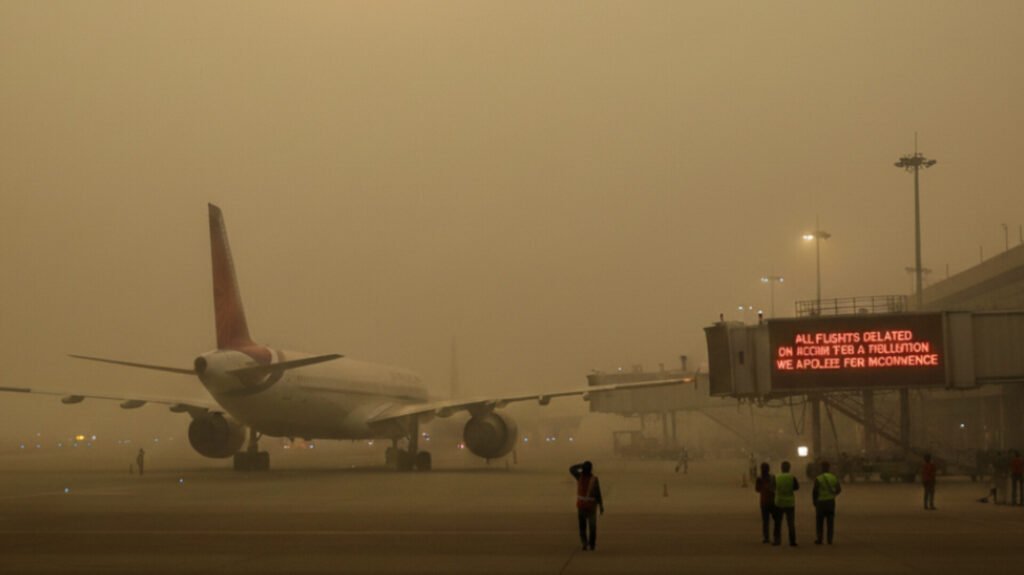
A dense blanket of fog combined with rising pollution levels brought Delhi to a near standstill on Thursday morning, disrupting train services, slowing road traffic, and delaying flights. While air operations at IGI Airport gradually stabilised, rail commuters and motorists continued to face major delays amid worsening winter smog.
Fog Triggers Low Visibility Protocols, Rail Network Worst Affected
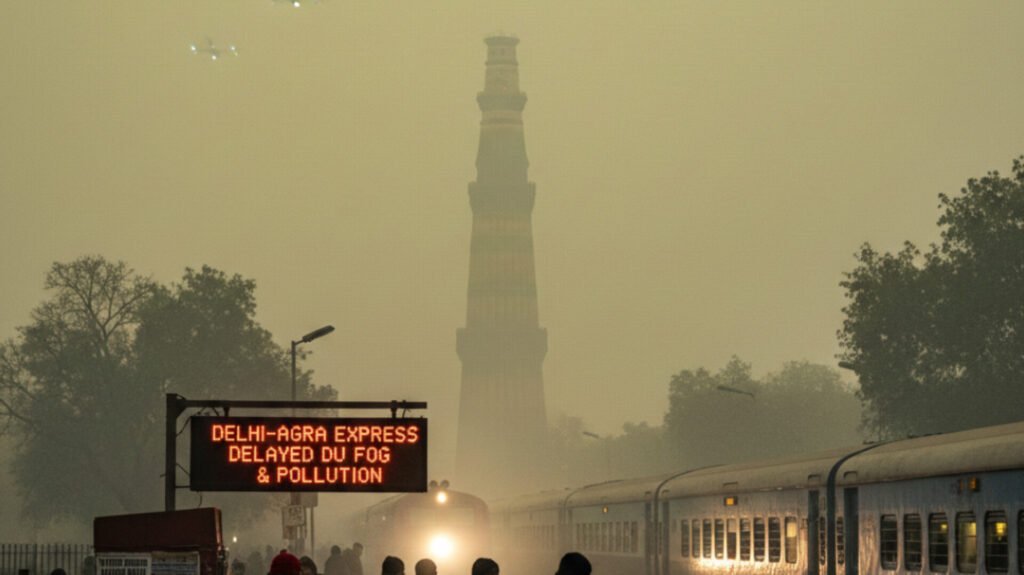
Visibility dropped sharply across the national capital during the early hours, prompting IGI Airport to activate CAT III conditions and Low Visibility Procedures. Nearly 40 flights were delayed before operations returned to normal. However, the rail network remained heavily affected, with more than 22 trains delayed for hours and some diverted, leaving passengers stranded at stations.
Impact Across the Capital
- Over 22 trains delayed, with waiting times ranging from minutes to nearly 12 hours
- Two long-distance trains diverted, affecting travel plans of hundreds of passengers
- Several superfast and Vande Bharat services disrupted due to poor visibility
- Nearly 40 flights delayed initially before operations stabilised at IGI Airport
- Low Visibility Procedures (LVPs) and CAT III conditions enforced at the airport
- Slow-moving traffic on major arterial roads and highways connecting NCR cities
- Increased risk of road accidents due to extremely low visibility
- Morning commuters faced long delays, especially office-goers and students
- Fog combined with pollution led to smog-like conditions across many areas
- Air quality deteriorated as pollutants remained trapped near the ground
- Residents reported breathing difficulty, throat irritation, and eye discomfort
- Emergency services and public transport experienced slower response times
- Weather officials warned that similar conditions may continue as winter intensifies
Pollution Intensifies Winter Smog
Meteorologists and pollution experts warn that calm winds and falling temperatures are allowing pollutants to accumulate near the surface, turning fog into thick smog. The poor dispersion of pollutants has aggravated air quality, posing health risks, especially for children, the elderly, and those with respiratory ailments.
With dense fog and pollution expected to persist in the coming days, Delhi’s winter woes appear far from over. While aviation systems can adapt to low visibility, rail and road users remain exposed to prolonged disruptions, highlighting the growing challenge of managing transport and air quality during the capital’s harsh winter season.