
Quick reads
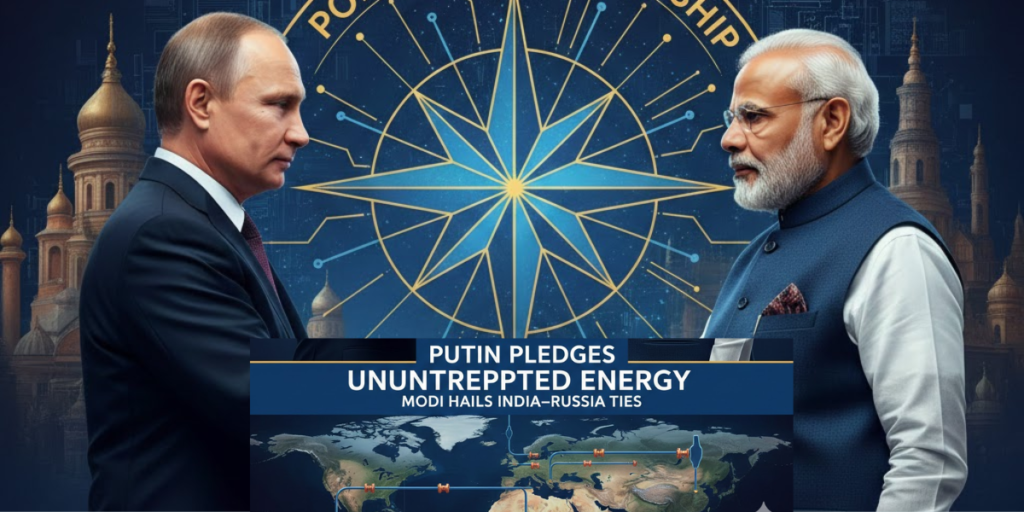
- Russian President Vladimir Putin pledged an “uninterrupted” supply of fuel to India during a state visit to New Delhi.
- Prime Minister Narendra Modi described India-Russia relations as steady and guiding “like a pole star.”
- The two leaders agreed on an economic cooperation roadmap to 2030, aiming to deepen trade and energy links.
- Officials flagged plans for greater energy cooperation, local-currency settlements and sectoral agreements across defence, fertilisers and civilian nuclear projects.
- The summit took place amid international attention and pressure on energy ties; both sides framed the moves as practical steps to ensure energy security.
Where it happened
The talks and joint statements were made in New Delhi during Russian President Vladimir Putin’s state visit and the 23rd annual India-Russia summit. The public remarks and signed agreements came at a joint press event and bilateral meetings at Hyderabad House.
How it happened
Putin promised steady fuel shipments to meet India’s needs and defended the bilateral energy relationship amid external diplomatic pressure.
Prime Minister Modi praised the long-standing relationship and announced an economic cooperation programme through 2030. Both sides signed or announced memoranda on trade, energy cooperation, rupee-ruble mechanisms and sectoral partnerships.
What it means
Putin’s pledge and the new cooperation plan signal that India and Russia want to lock in closer practical ties on energy and trade despite geopolitical friction.
For India, securing reliable fuel supplies helps meet growing demand; for Russia, stronger trade and payment arrangements offer alternative markets and avenues for revenue.
The story
Russian President Vladimir Putin, on a two-day state visit to New Delhi, told Indian leaders that Moscow would ensure an “uninterrupted” supply of fuel to India, while Prime Minister Narendra Modi described the bilateral relationship as a steady guiding “pole star.”
The leaders announced an economic cooperation roadmap through 2030, with aims to deepen trade, strengthen energy ties and explore rupee–ruble settlement mechanisms.
Officials highlighted deals and memoranda in areas such as energy, defence, fertilisers and civilian nuclear cooperation; both governments framed the actions as steps to secure energy and economic resilience amid external pressures.