
Quick reads
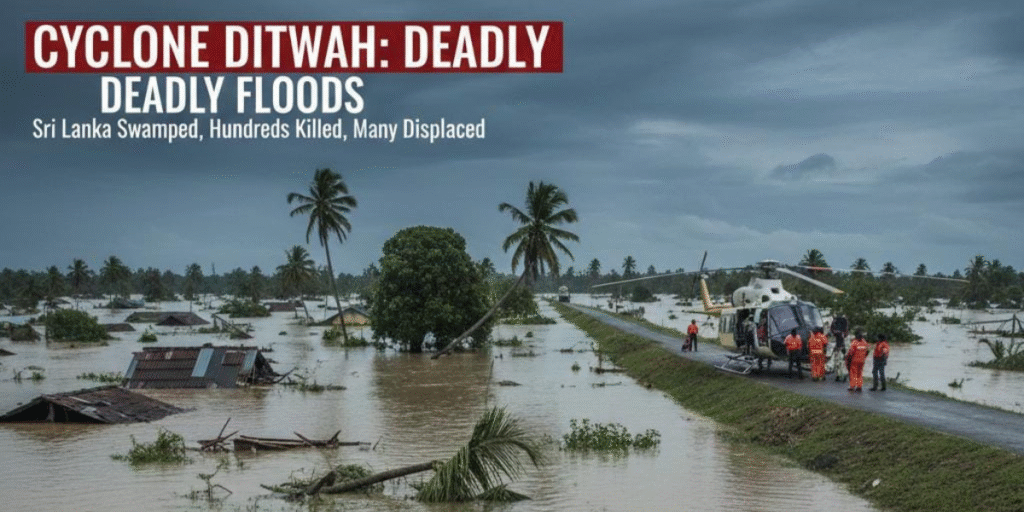
- Heavy rains from Cyclone Ditwah caused catastrophic floods and landslides across Sri Lanka.
- Official casualty reports vary as rescue teams work; counts in major outlets range from the low hundreds to more than 300 as of Nov 30–Dec 1, 2025.
- Nearly one million people have been affected, and tens to hundreds of thousands have moved to emergency shelters.
- Floodwaters breached at least one reservoir/dam, and rivers overflowed, triggering widespread evacuations and infrastructure failures.
- The army, navy and air force are involved in large-scale rescue and relief; power and communications remain disrupted in many places.
Where it happened
Flooding and landslides have hit the island hard, with the worst damage reported in the western and central belts, including the greater Colombo area and river valleys such as the Kelani River basin. Several towns and low-lying neighbourhoods were submerged; hillside communities suffered deadly landslides after saturated soils gave way. Officials also reported breaches and overflow at reservoirs in affected catchments.
How it happened
Cyclone Ditwah brought prolonged, heavy rainfall as it moved across and just off Sri Lanka in late November 2025. The downpour pushed river levels to record highs, sent floodwaters into urban and rural neighbourhoods, and caused slopes to collapse into villages. In at least one location, authorities reported a dam or reservoir breach that worsened downstream flooding. Emergency services have carried out airlifts and large-scale evacuations while trying to restore power, water and communications.
Story in short
Cyclone Ditwah hit Sri Lanka in late November 2025, bringing heavy, continuous rain that triggered severe floods and deadly landslides. Casualty numbers are still shifting as rescue teams work, but officials and major news outlets confirm deaths in the hundreds, with many still missing.
Nearly a million people have been affected. Tens of thousands were moved to shelters after homes were damaged or washed away. Overflowing rivers, including the Kelani and a breached reservoir, left several neighbourhoods around Colombo and other districts underwater. Roads, bridges and power lines were heavily damaged, slowing relief efforts.
Thousands of military and emergency workers are carrying out rescues, airlifting stranded residents, and distributing food and essentials. Authorities warn that water levels may take days to recede and more landslides remain possible.
All figures come from verified reports issued between November 29 and December 1, 2025. For the most accurate updates, follow Sri Lanka’s Disaster Management Centre and trusted news sources.